1. Identity gate
Confirm common and botanical names, plant part, country or region of origin when relevant, extract form, ratio, marker, carrier, and solvent direction.
Buyer qualification guide
Use five practical gates to separate a clear product match from unanswered identity, test, document, sample, and commercial questions.
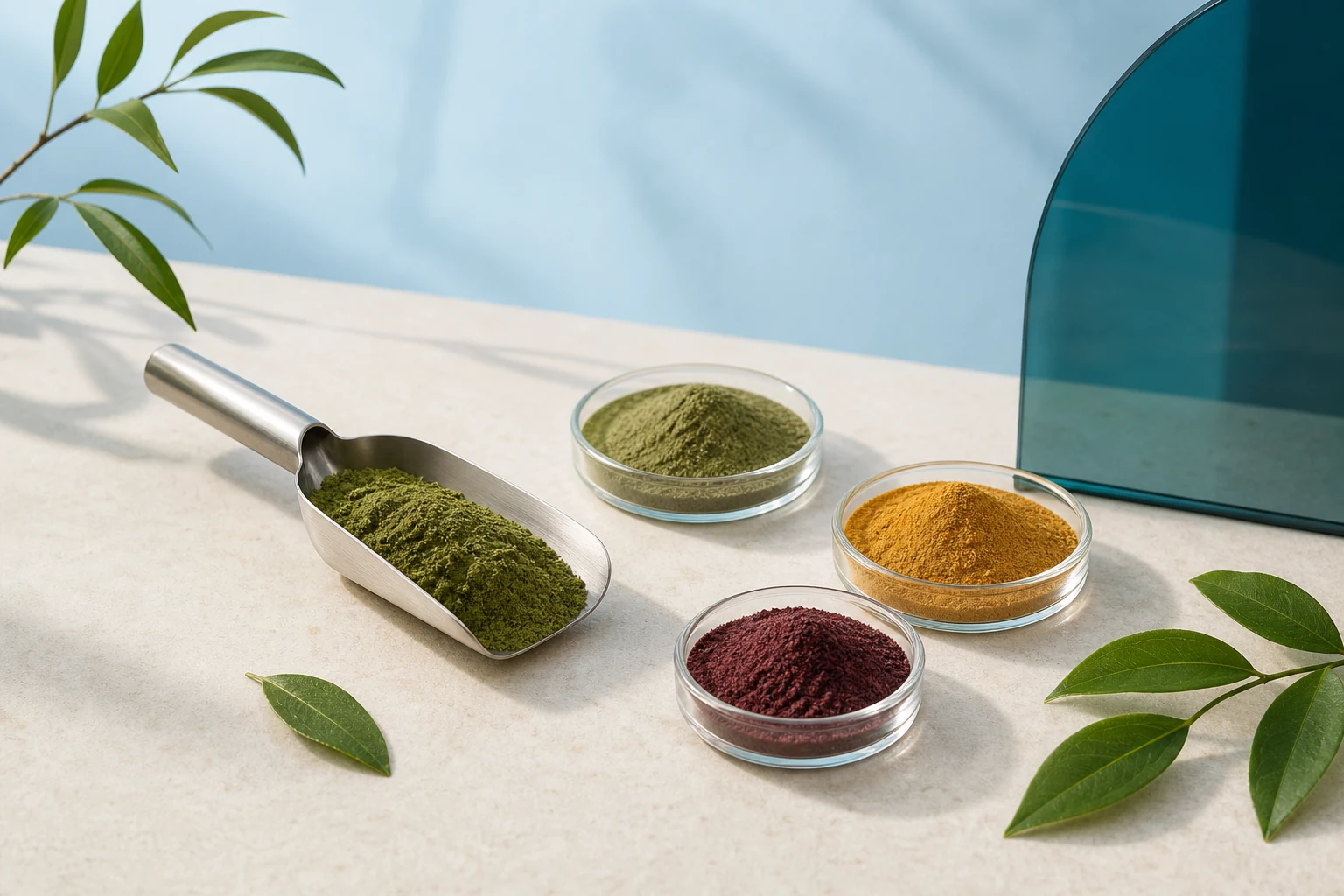
A supplier review is stronger when product identity, technical expectations, documents, sample evaluation, and commercial scope are handled as separate decisions.
Confirm common and botanical names, plant part, country or region of origin when relevant, extract form, ratio, marker, carrier, and solvent direction.
Define assay or marker target, test method, appearance, particle size, moisture, microbiology, heavy metals, and other buyer-required limits without assuming they apply to every product.
Request the product-specific specification, representative COA, SDS, process or origin information, allergen statement, packaging details, and only the certifications that matter to the project.
Set the sample purpose, evaluation method, required quantity, destination, comparison criteria, feedback owner, and the decision that follows a successful review.
Separate technical qualification from current availability, trial quantity, bulk forecast, packaging, price, lead time, Incoterm, and payment discussions.
Supplier-ready checklist
Lead with one defined botanical target and keep confirmed facts separate from preferences and open questions.
A red flag is a reason to ask a precise question—not automatic proof that a supplier or product is unsuitable.
The same plant may produce different ingredient profiles depending on the root, leaf, fruit, seed, bark, or whole-plant material used.
An extract ratio alone does not explain botanical identity, carrier, solvent direction, marker content, assay method, or final product limits.
Ask which documents apply to the selected product, current specification, intended market, and discussed batch rather than accepting a generic list.
Prices are difficult to compare when identity, assay, test method, quantity, packaging, destination, and delivery basis differ.
Use these answers as a preparation guide; final decisions still depend on the selected product, batch, market, application, and order.
Include the botanical name, plant part, extract ratio or marker target, preferred test method, quantity range, destination market, sample plan, packaging direction, and document questions.
No. Review it together with botanical identity, plant part, solvent or carrier direction, marker or assay expectations, test method, and relevant quality limits.
Request only the documents relevant to the product and market, such as a specification sheet, representative COA, SDS, process or origin information, allergen statement, and packaging information.
Batch-specific values, current availability, final specification, price, lead time, regulatory suitability, and certificate scope require product-, batch-, market-, and order-specific confirmation.