Raw material sourcing by kg
Five-Culture–Vitamin–Mineral–Ashwagandha Blend
Prepare a kg-based sourcing discussion for the combination of Vitamin D3, Riboflavin, Vitamin B6, Vitamin B12, Biotin, Pantothenic acid, Magnesium oxide, Zinc citrate, Chromium chloride, Lactobacillus acidophilus (preparation identifier to confirm: CUL60), Lactobacillus acidophilus (preparation identifier to confirm: CUL21), Bifidobacterium animalis subsp. lactis (preparation identifier to confirm: CUL34), Bifidobacterium bifidum (preparation identifier to confirm: CUL20), Lactobacillus plantarum (preparation identifier to confirm: CUL66), Ashwagandha root extract. Agree the complete proposed preparation, relative composition and supplier documentation for the intended project.
Explore Nutrition Ingredients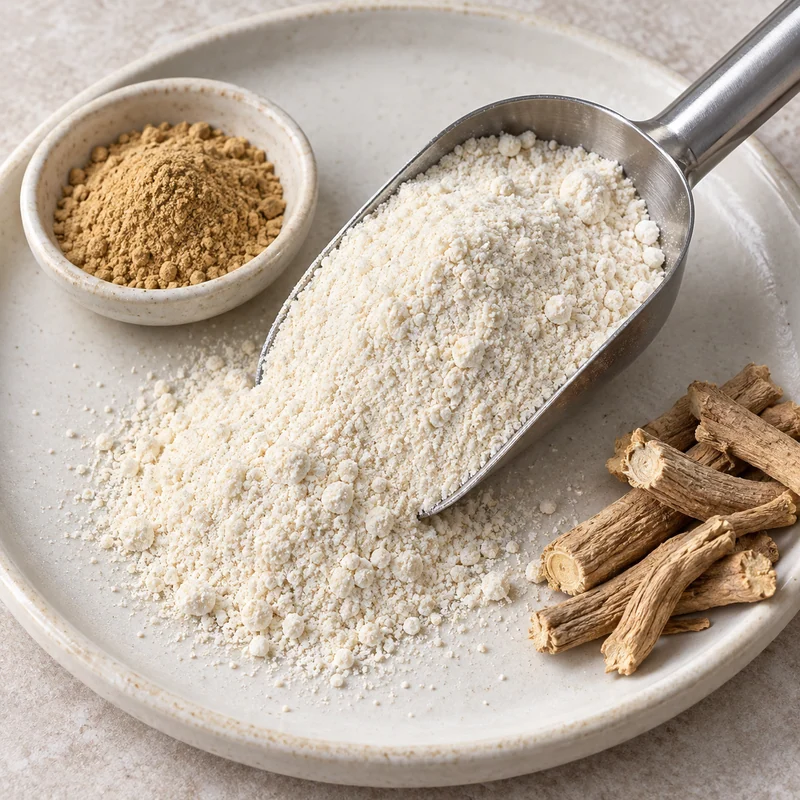
Define your ingredient input
Purchasing review should address culture identity, vitamin preparations and botanical/mineral compatibility. Constituent brief: Vitamin D3; Riboflavin; Vitamin B6; Vitamin B12; Biotin; Pantothenic acid; Magnesium oxide; Zinc citrate; Chromium chloride; Lactobacillus acidophilus (preparation identifier to confirm: CUL60); Lactobacillus acidophilus (preparation identifier to confirm: CUL21); Bifidobacterium animalis subsp. lactis (preparation identifier to confirm: CUL34); Bifidobacterium bifidum (preparation identifier to confirm: CUL20); Lactobacillus plantarum (preparation identifier to confirm: CUL66); Ashwagandha root extract. Confirm the complete proposed preparations, relative composition, ancillary ingredients, sample requirements and physical delivery form with the supplier. No finished serving amount or supply specification is assumed.
Discuss your procurement requirements
- Does the proposed material retain the complete named group: Vitamin D3; Riboflavin; Vitamin B6; Vitamin B12; Biotin; Pantothenic acid; Magnesium oxide; Zinc citrate; Chromium chloride; Lactobacillus acidophilus (preparation identifier to confirm: CUL60); Lactobacillus acidophilus (preparation identifier to confirm: CUL21); Bifidobacterium animalis subsp. lactis (preparation identifier to confirm: CUL34); Bifidobacterium bifidum (preparation identifier to confirm: CUL20); Lactobacillus plantarum (preparation identifier to confirm: CUL66); Ashwagandha root extract?
- How will the supplier declare culture identity, vitamin preparations and botanical/mineral compatibility?
- How will the two acidophilus preparations and the three other culture entries be individually identified?
- Which compatibility and handling evaluation should cover the culture group together with ashwagandha, magnesium oxide, zinc citrate and chromium chloride?
- Which source identities, plant parts, nutrient preparations or culture/enzyme forms should the agreed specification identify, without adding an unsupported form?
- What relative composition is proposed for this whole ingredient group rather than copying the serving examples?
- What actual physical delivery form, carrier system and ancillary ingredients are proposed for kg-based purchasing?
- Which identity/composition methods, compatibility checks and handling information should be reviewed for this particular combination?
- What sample quantity, evaluation criteria, packaging and purchasing quantity in kg should be discussed with the proposed supplier?
- Which intended formulation, destination and supporting documents should the supplier assess before commercial terms are agreed?
Confirm the offered specification, analytical methods, sample arrangements and documentation with the proposed supplier for your intended project.
Formulation and procurement gallery
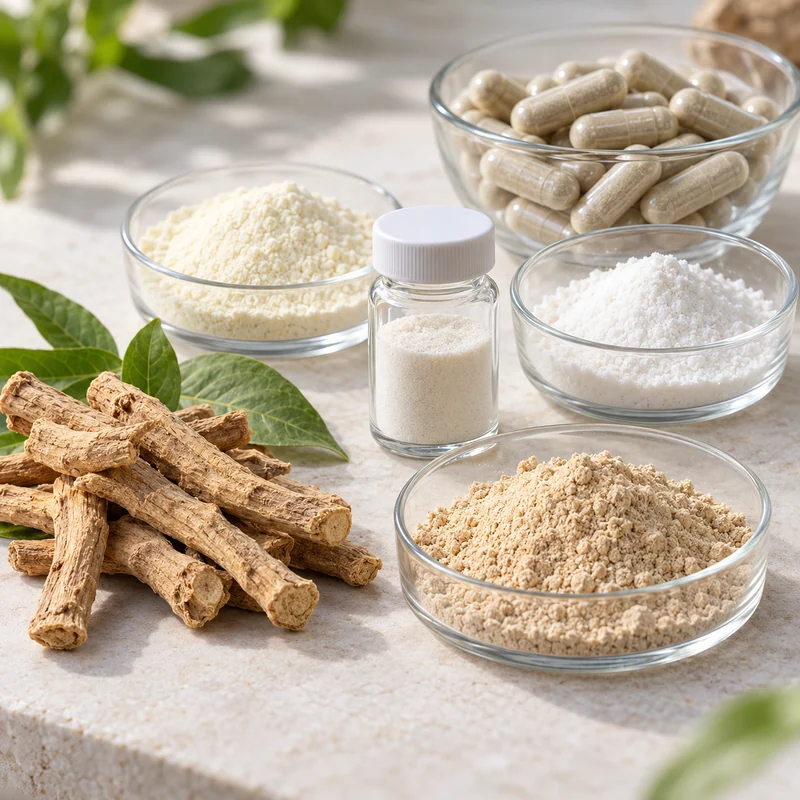
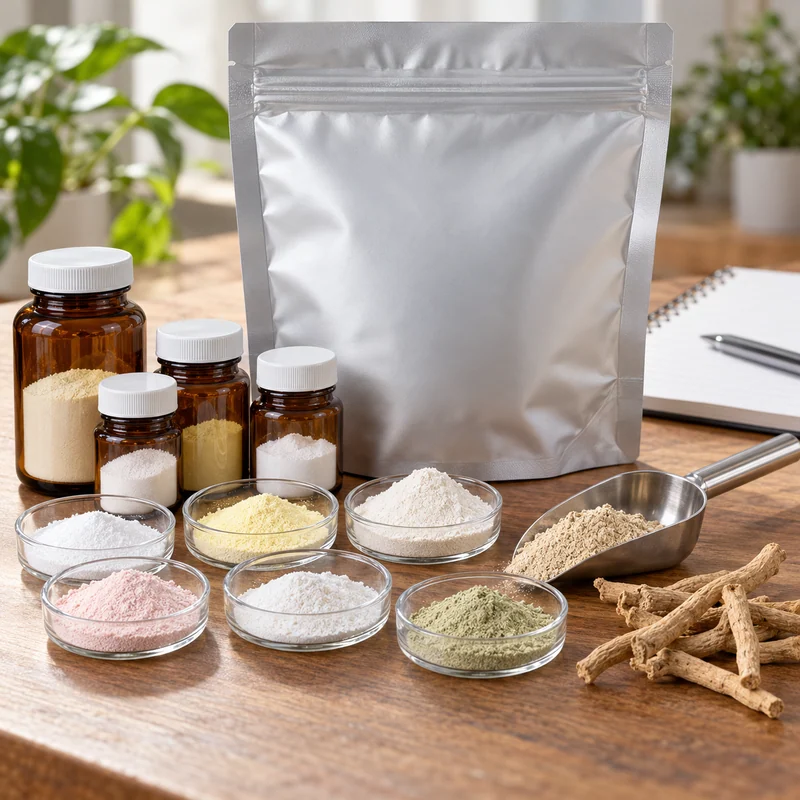
Related ingredient inputs
- Related ingredient or composition — Compare the complete named constituent groups and preparations; these materials are not assumed equivalent.
Plan your purchase by kg
Share quantity in kg, intended formulation, destination and packaging requirements. Review the actual proposed material and purchase terms with the supplier.
Discuss Five-Culture–Vitamin–Mineral–Ashwagandha Blend sourcing