Raw material sourcing by kg
Polyglycerol Esters of Fatty Acids
Discuss polyglycerol fatty-acid esters through a defined ingredient-family enquiry. Compare the proposed material identity, fatty-acid profile and preparation declaration before choosing a sample for evaluation.
Explore Food Additives & Functional Food Ingredients
Define your ingredient input
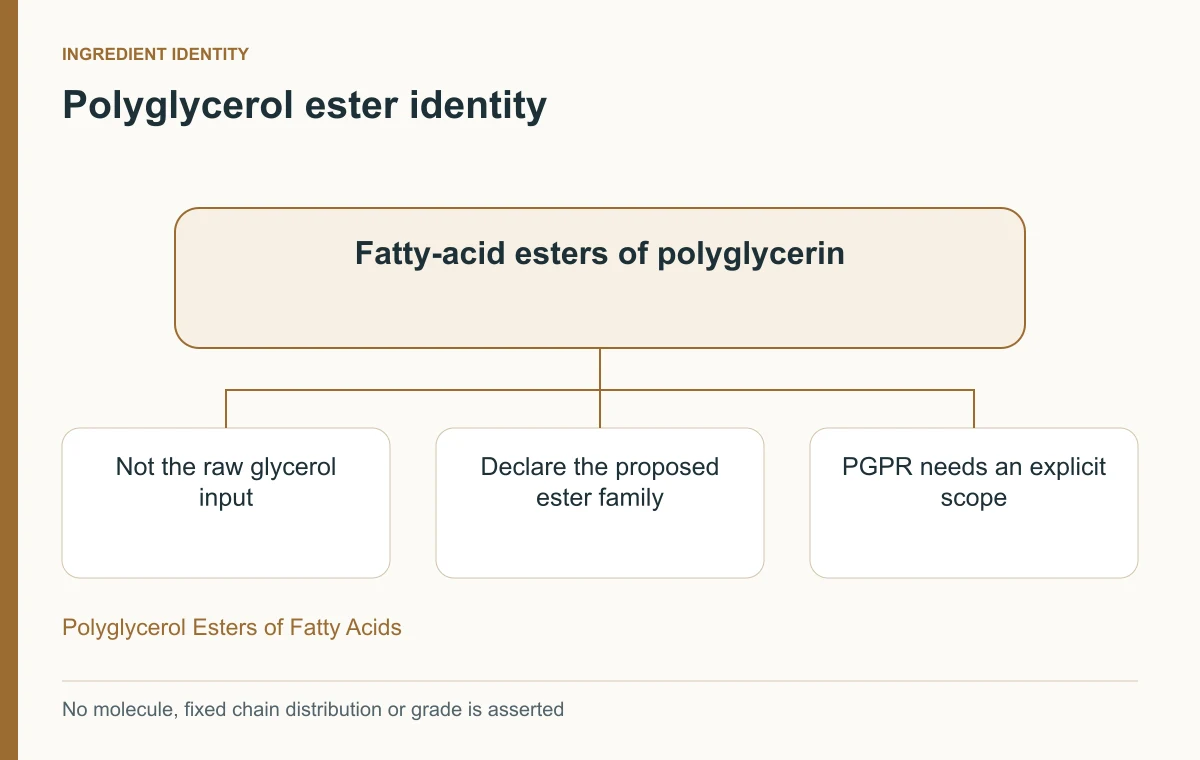
Name the polyglycerol fatty-acid ester family, not raw glycerol. Keep PGPR separate unless expressly requested. Compare chain distribution, fatty-acid profile, HLB description, complete preparation inputs and methods for the actual supplier proposal without assuming a fixed grade.
Discuss your procurement requirements
- Which polyglycerol fatty-acid ester family is requested, and is PGPR excluded or separately specified?
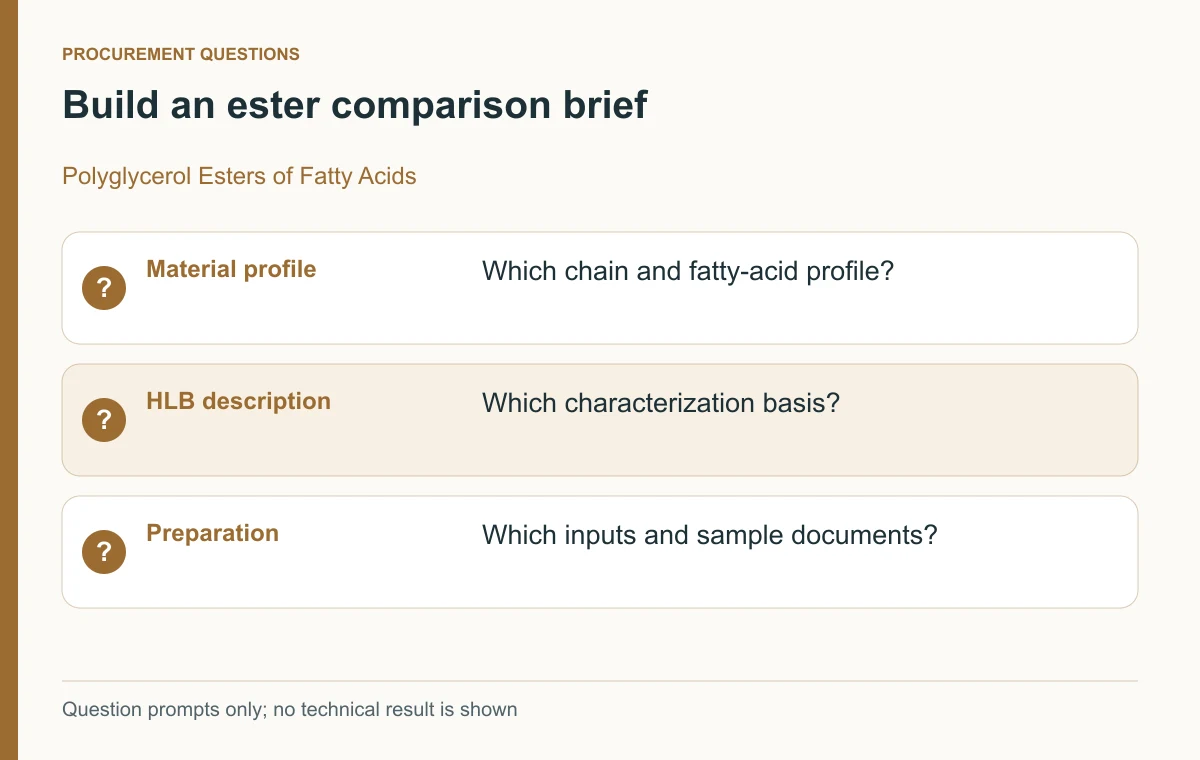
- What chain distribution and fatty-acid profile are declared for the proposal?
- Which HLB description, characterization basis and physical form are relevant?
- Are carriers or other preparation components present?
- Which sample evaluation, methods and supplier documents should be reviewed?
- Which application, destination, quantity, packaging and timing should guide the enquiry?
Confirm the offered specification, analytical methods, sample arrangements and documentation with the proposed supplier for your intended project.
Declared ingredient identity
- Polyglycerol Esters of Fatty Acids
Confirm the proposed grade, preparation inputs and specification with the supplier. This generic identity does not establish a supplied batch.
Keep the ester family distinct
Name the requested polyglycerol fatty-acid ester family rather than the raw glycerol input. Ask the supplier to describe the proposed ester material and all preparation inputs. Do not silently substitute polyglycerol polyricinoleate, or PGPR, for an enquiry with a different scope. The family name does not select a single molecule, fixed polyglycerol chain length or branded grade. Start with the material identity so that related but different inputs are not compared as if they were the same proposal.
Describe the profile relevant to the project
Explain the intended application and ask which polyglycerol chain distribution, fatty-acid profile, HLB description and physical form the supplier proposes. Request the basis of any characterization used for comparison. These are grade-selection questions, not specifications already established for an unselected material. A manufacturer's average polymerization, origin statement or formulation-performance example should not be transferred to another supplier's proposal. Define the assessment priorities around the actual project and compare evidence for the material being discussed.
Align samples, methods and documents
Agree on the sample identity, relevant test approach and accompanying specification before making comparisons. Ask which composition, source, allergen and analytical-method documents can support the proposal. State the application and receiving market so that appropriate material-specific review can occur. Packaging, quantity, timing and sample availability remain topics for supplier confirmation. Keep those commercial questions separate from the ester identity and do not assume that a generic family name establishes certification, regulatory suitability or a measured application result.
Procurement questions and answers
Is this the same input as glycerol?
No. Polyglycerol fatty-acid esters are an ester family, rather than raw glycerol or glycerin.
Does the name automatically mean PGPR?
No. The intended ester identity should be explicit; PGPR must not be substituted without a matching material declaration and sourcing scope.
Is a fixed HLB or chain length specified?
Chain distribution, fatty-acid profile, HLB, physical form and preparation inputs are questions for the actual supplier proposal, not fixed promises attached to this family name.
Formulation and procurement gallery
Plan your purchase by kg
Share quantity in kg, intended formulation, destination and packaging requirements. Review the actual proposed material and purchase terms with the supplier.