Raw material sourcing by kg
Calcium Acetate
Compare calcium acetate proposals with the ingredient identity, intended food application and handling requirements made explicit in the purchasing brief.
Explore Food Additives & Functional Food Ingredients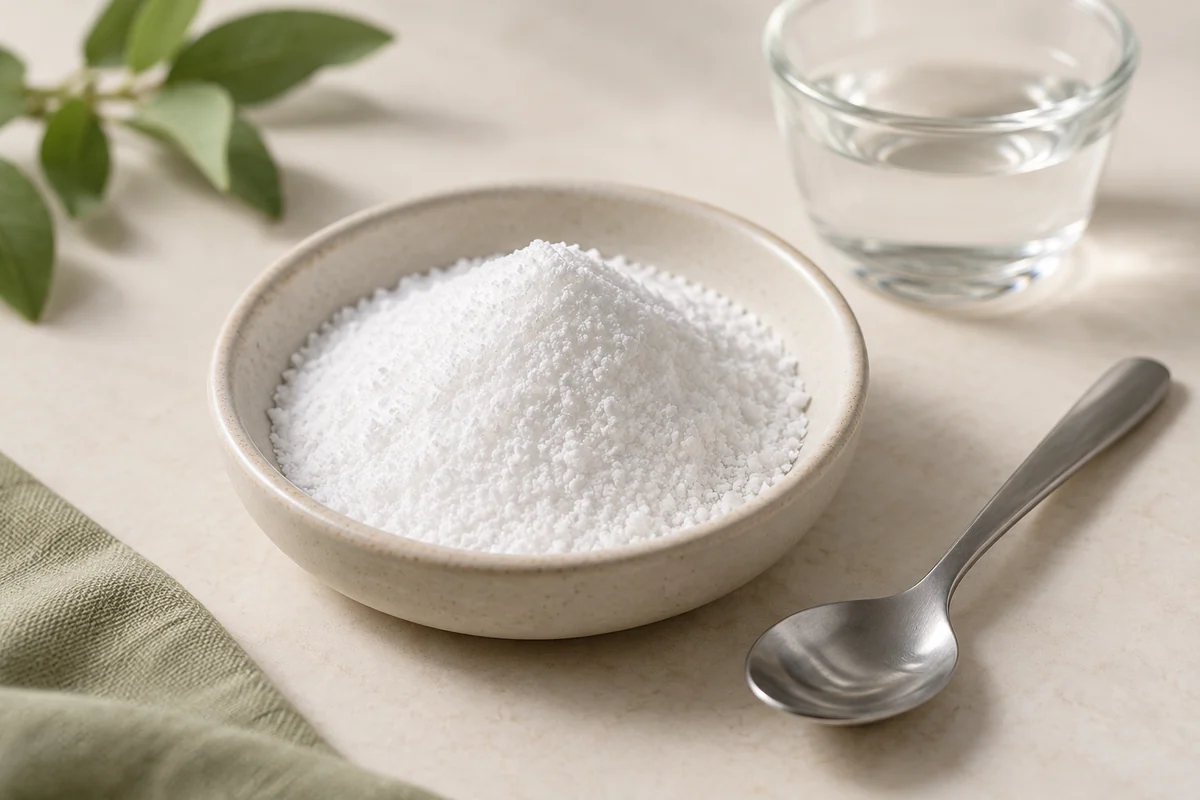
Define your ingredient input
Calcium acetate is a named calcium salt used in food-ingredient applications. It should be distinguished from sodium acetate, potassium acetate and calcium propionate. Powder and granular descriptions refer to physical form and should be compared within the same ingredient identity.
Discuss your procurement requirements
- Do the identity documents specify calcium acetate rather than another acetate or another calcium salt?
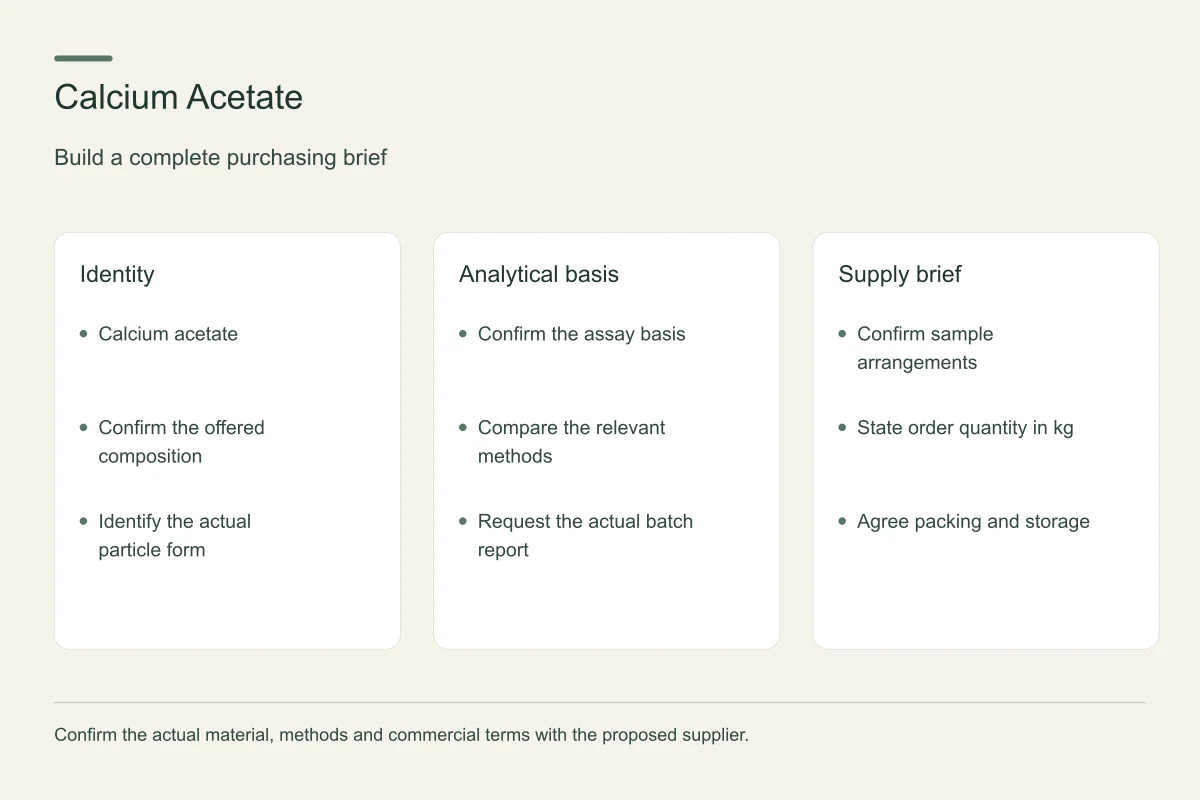
- Which composition, assay basis and analytical methods describe the proposed material?
- Is the offered material powder or granular, and which handling characteristics matter for the project?
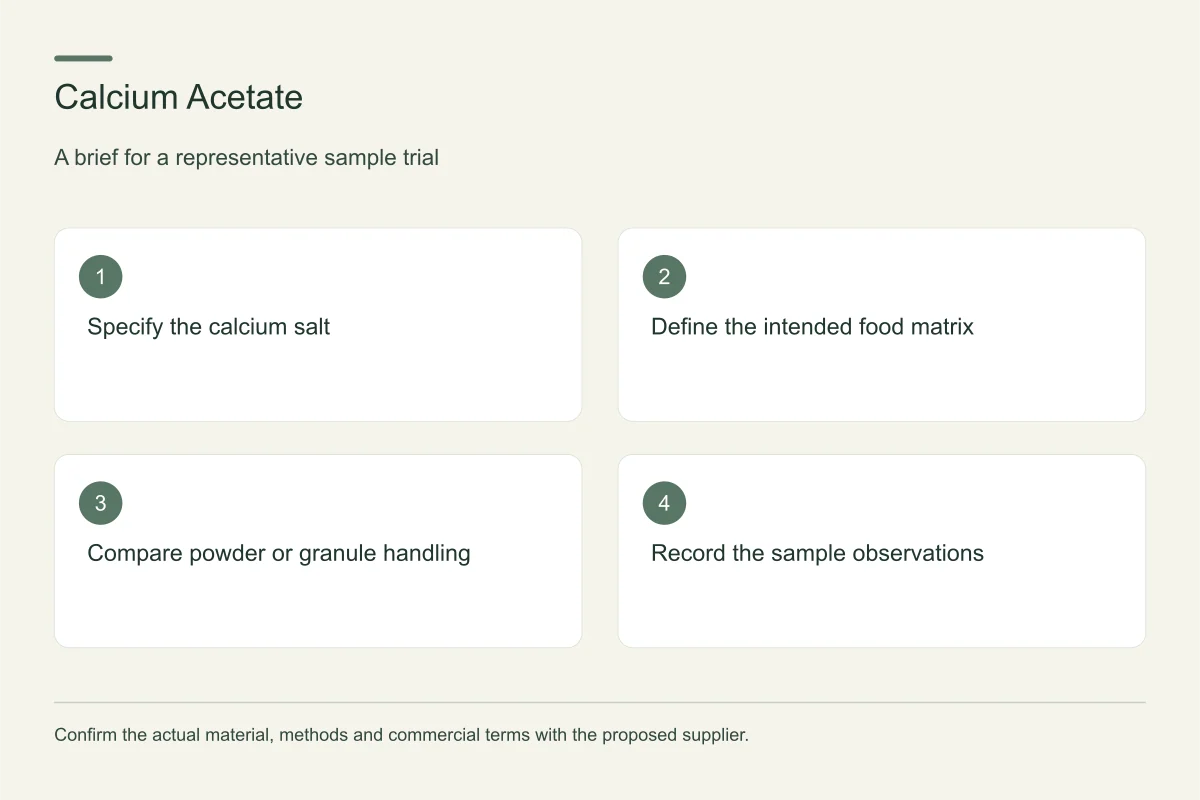
- What food matrix and comparison criteria should be used for the representative sample trial?
- What storage, packaging and destination-document information can the supplier confirm?
- Can the supplier confirm batch reports, sample arrangements, order quantity in kg, lead time and commercial terms?
Other ingredient identity pages: Triacetin · Sucrose Acetate Isobutyrate · Triethyl Citrate · Propylene Glycol Fatty Acid Esters · Candelilla Wax · Quillaia Extract · Propylene Glycol Alginate · Potassium Acetate · Potassium Benzoate
Confirm the offered specification, analytical methods, sample arrangements and documentation with the proposed supplier for your intended project.
Use the precise salt identity
Ask for calcium acetate by its full name and compare the identity statement with the proposed specification. Another acetate salt or calcium-containing ingredient should be recorded separately, even when an application description sounds similar. Confirm any additional components in the offer. The ingredient name is the starting point for procurement, while the actual composition and documents support the comparison.
Compare form and performance within one ingredient
Powder and granular offers may differ in handling, dispersion or sampling requirements. Ask which characteristics are relevant to the intended food project and how they are measured. Evaluate a representative sample under agreed conditions. A change in particle form or a specification label should not be treated as proof of a different ingredient or a guaranteed formulation outcome.
Match the documents to the project
State the intended food matrix, processing conditions, destination and requested quantity in kg. Ask the supplier to identify the applicable specification, analytical report and other documents for that proposal. Agree sample arrangements and the desired package format. Confirm storage instructions, lead time and commercial terms before ordering; a general ingredient description does not establish those details.
Procurement questions and answers
Are calcium acetate and calcium propionate the same ingredient?
They are different named salts. Keep their identity documents and sample comparisons separate.
How should powder and granular offers be compared?
They are forms of the same named calcium acetate identity. Compare their relevant handling and specification details.
Does an ingredient reference establish suitability for every food?
The intended application, proposed specification and destination requirements should be reviewed for the actual project.
Formulation and procurement gallery
Plan your purchase by kg
Share quantity in kg, intended formulation, destination and packaging requirements. Review the actual proposed material and purchase terms with the supplier.