Raw material sourcing by kg
Propylene Glycol Alginate
Propylene glycol alginate, often abbreviated PGA, is an ester derivative of alginic acid. It is discussed as a food hydrocolloid for thickening, stabilisation, emulsion and foam formulation projects. Specify the full ingredient name in the sourcing brief.
Explore Food Additives & Functional Food Ingredients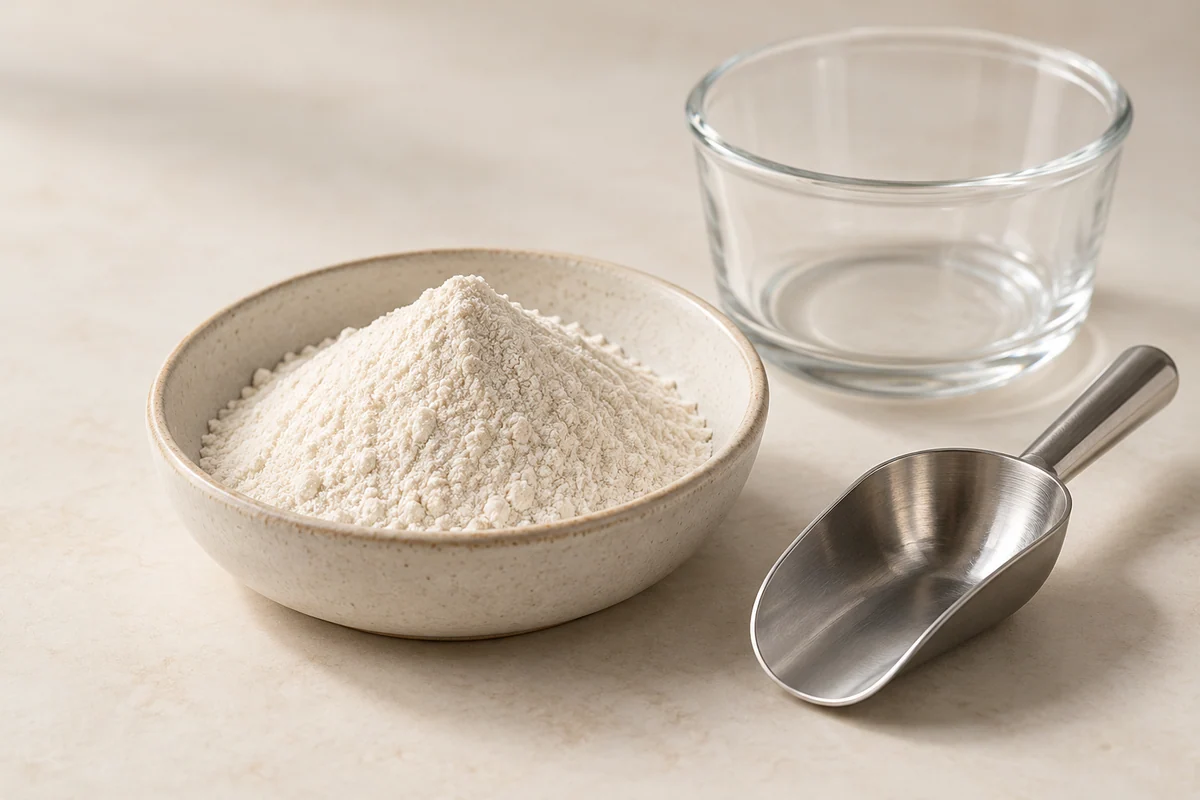
Define your ingredient input
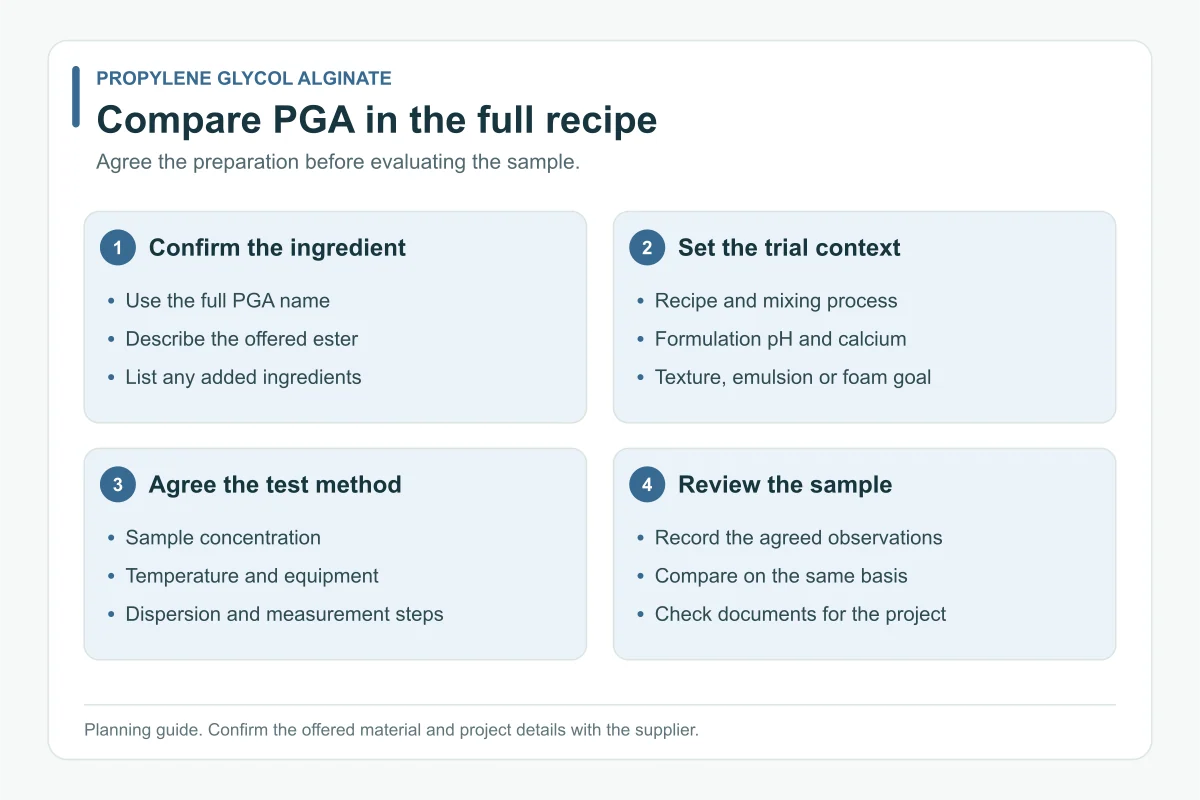
PGA has a different chemical preparation from sodium alginate and from propylene glycol. Confirm the offered ester preparation, viscosity measurement conditions and physical form when comparing proposals. The intended formulation and process should guide sample evaluation. Agree the proposed specification, analytical methods and intended-market documents with the supplier.
Discuss your procurement requirements
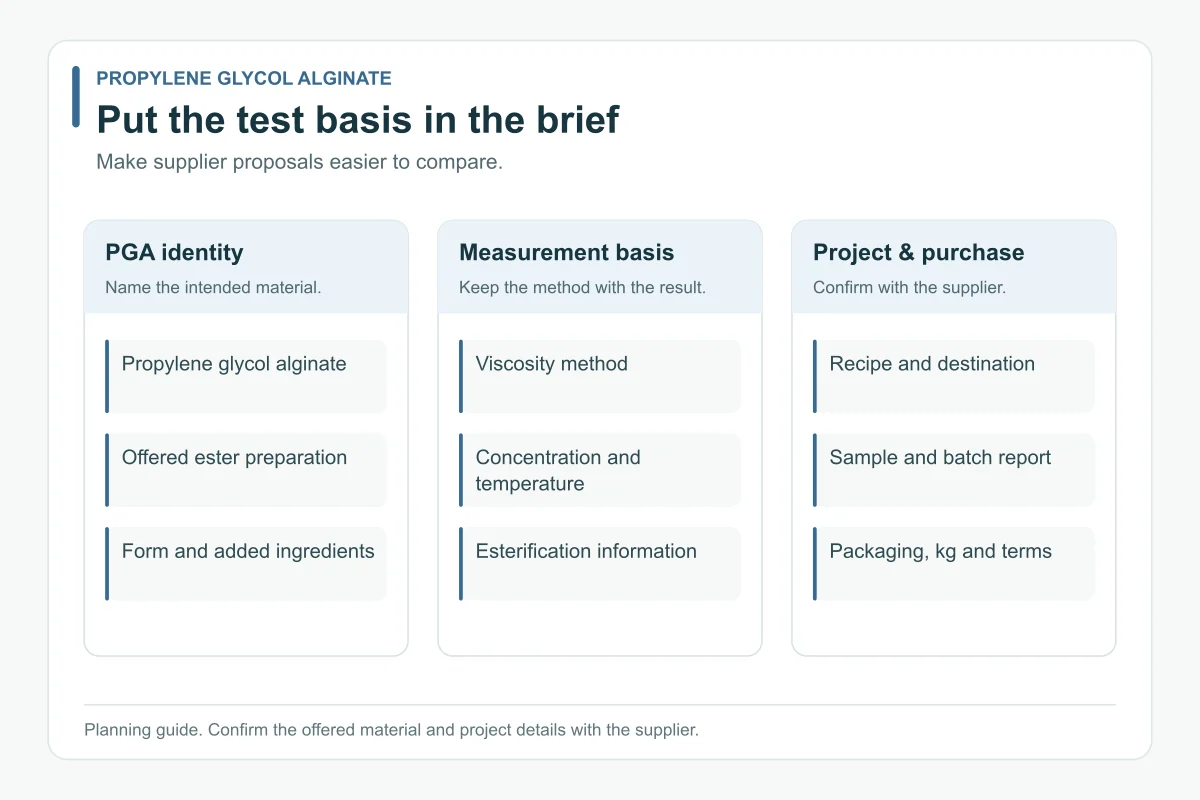
- Do the identity documents specify propylene glycol alginate and distinguish the proposal from sodium alginate, propylene glycol and any declared blend?
- What esterification information, offered physical form and additional ingredients describe the proposed material?
- Which viscosity method, sample concentration, temperature and measurement conditions support the stated specification?
- What mixing, dispersion, formulation pH, calcium and process conditions should be used for a representative sample comparison?
- Which identity, impurity and microbiological tests and intended-food-use documents are available for the target destination?
- Can the supplier confirm a representative sample, batch report, packaging, storage instructions, requested quantity in kg and commercial terms?
Other ingredient identity pages: Triacetin · Sucrose Acetate Isobutyrate · Triethyl Citrate · Calcium Acetate · Propylene Glycol Fatty Acid Esters · Candelilla Wax · Quillaia Extract · Potassium Acetate · Potassium Benzoate
Confirm the offered specification, analytical methods, sample arrangements and documentation with the proposed supplier for your intended project.
Keep the ester identity consistent
Use the full propylene glycol alginate name in the quotation and sample request. Ask the supplier to describe the offered ester preparation and any additional ingredients. Match that description with the specification and analytical documents. This identity check helps the purchasing and formulation teams compare the intended hydrocolloid consistently across proposals.
Compare viscosity under agreed conditions
A viscosity result needs its measurement conditions to be useful. Ask for the sample concentration, temperature, equipment and method used for the offered material. Review esterification information alongside the viscosity description when selecting samples. Use the same agreed preparation and measurement basis for a comparison, and record dispersion or handling differences that affect the proposed process.
Test the hydrocolloid in the complete formulation
Describe the intended recipe, mixing process and the texture, emulsion or foam behaviour to be evaluated. Discuss formulation pH and calcium conditions with the supplier before the trial. Compare the sample under the agreed process, then review the result with the proposed batch report and destination documents. Confirm packaging, storage and quantity in kg for the selected proposal.
Procurement questions and answers
Is PGA interchangeable with sodium alginate or propylene glycol?
These names describe different ingredient identities. Request propylene glycol alginate explicitly and verify the offered preparation and complete composition in the supplier documents.
Why should a viscosity value include a test method?
Concentration, temperature and measurement conditions affect the comparison. Ask the supplier to state those conditions and use the same basis when reviewing samples.
Which application details help select a sample?
Share the intended recipe, mixing process, formulation pH and calcium context, together with the texture, emulsion or foam observations required. Agree trial conditions and review the supporting documents with the supplier.
Formulation and procurement gallery
Plan your purchase by kg
Share quantity in kg, intended formulation, destination and packaging requirements. Review the actual proposed material and purchase terms with the supplier.