Raw material sourcing by kg
Propylene Glycol Fatty Acid Esters
Compare propylene glycol fatty acid ester proposals with their full composition, intended emulsifier application and sample-evaluation method clearly defined.
Explore Food Additives & Functional Food Ingredients
Define your ingredient input
This ingredient group concerns esters formed with propylene glycol and fatty acids. It is distinct from polyglycerol fatty acid esters, propylene glycol itself and propylene glycol alginate. A purchasing brief should identify the proposed composition rather than assume that every commercial emulsifier in the group has the same ester distribution or other ingredients.
Discuss your procurement requirements
- Does the proposal identify propylene glycol fatty acid esters and distinguish them from polyglycerol esters and other emulsifiers?
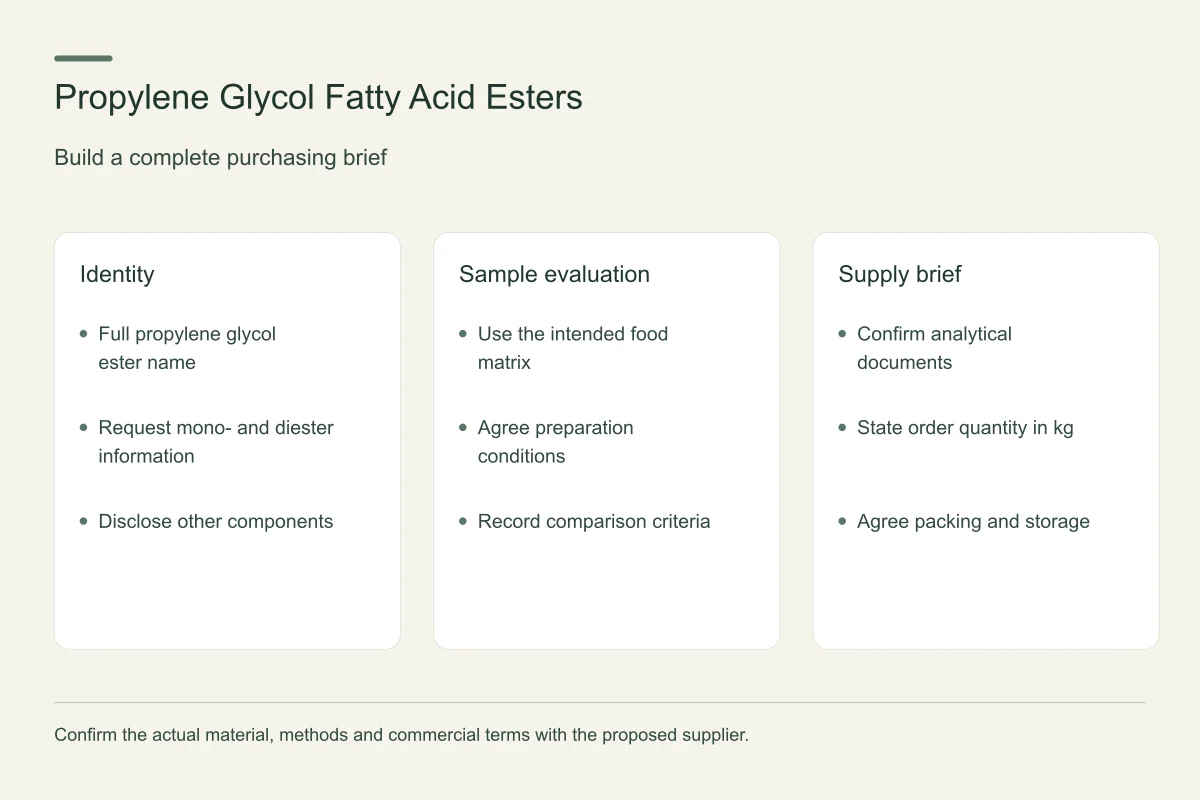
- What fatty-acid and mono- or diester composition information describes the actual offer?
- Are other ingredients present, and which specification and analytical methods apply?
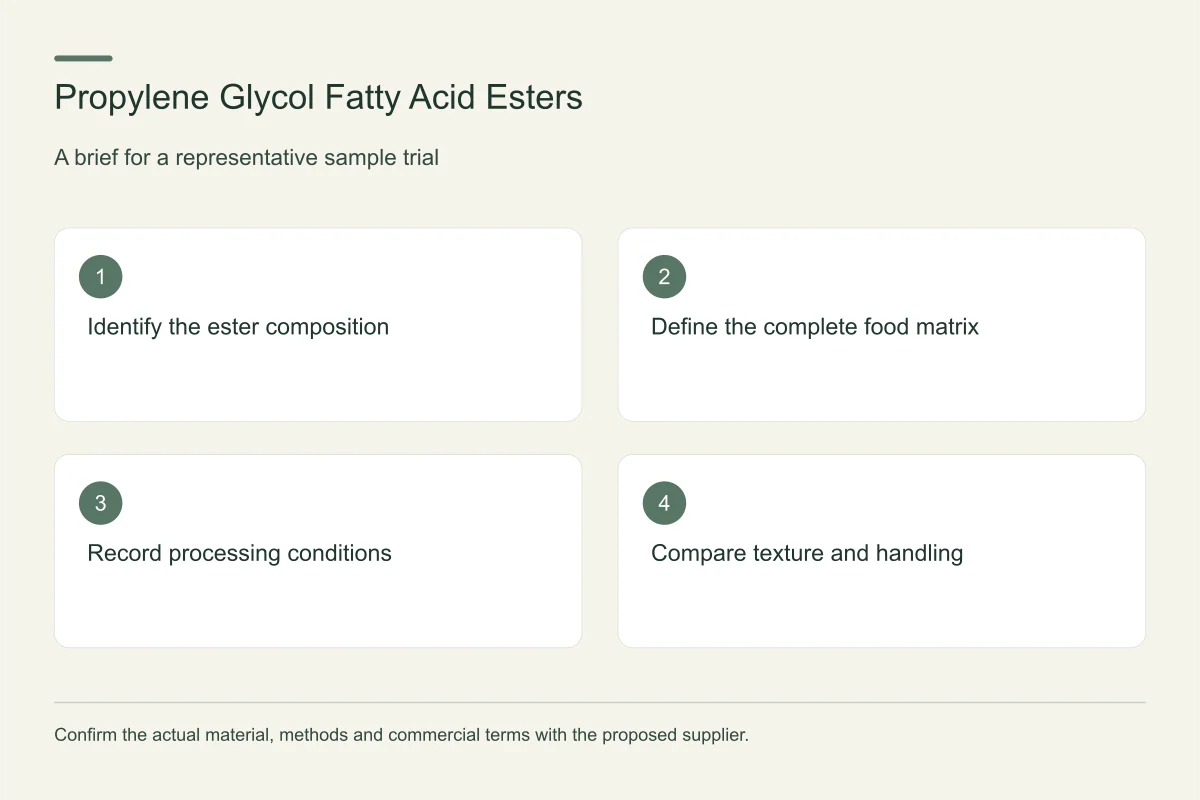
- What food matrix, processing conditions and comparison criteria should be used in a sample trial?
- What physical-form, handling, storage and packaging information can the supplier confirm?
- Can the supplier confirm representative samples, batch documents, order quantity in kg and commercial terms?
Other ingredient identity pages: Triacetin · Sucrose Acetate Isobutyrate · Triethyl Citrate · Calcium Acetate · Candelilla Wax · Quillaia Extract · Propylene Glycol Alginate · Potassium Acetate · Potassium Benzoate
Confirm the offered specification, analytical methods, sample arrangements and documentation with the proposed supplier for your intended project.
Clarify the composition of the emulsifier
Request the full ingredient description and composition of the proposed material. The words propylene glycol esters describe an ingredient group, so the actual ester and fatty-acid information matters when comparing offers. Disclose any other components in a commercial preparation. Keep polyglycerol esters, propylene glycol alginate and other emulsifier groups in separate procurement records rather than treating similar abbreviations as interchangeable.
Use a controlled formulation comparison
Describe the intended food matrix and the other emulsifiers or ingredients already in the recipe. Agree the sample-preparation and processing conditions with the formulation team and the supplier. Define the observations to record, such as mixing, texture or handling. Assess performance in the intended formulation, with the comparison criteria and observation period agreed in advance.
Align form, specification and supply details
Ask for the physical-form description and the analytical methods relevant to the actual proposal. Compare samples and reports on a consistent basis, and request storage and handling guidance. Include order quantity in kg, package preferences and destination-document requirements in the brief. Sample availability, lead time and other commercial terms should be confirmed directly for the proposed supply.
Procurement questions and answers
Are these the same as polyglycerol fatty acid esters?
They are different ingredient groups. Use the full name and composition documents rather than an ambiguous abbreviation.
Does the group name define one fixed ester composition?
Request composition and analytical information for the actual offer, including other ingredients in any preparation.
Can a general description predict the finished-food result?
Evaluate the proposed sample in the intended complete formulation using agreed conditions and comparison criteria.
Formulation and procurement gallery
Plan your purchase by kg
Share quantity in kg, intended formulation, destination and packaging requirements. Review the actual proposed material and purchase terms with the supplier.