Raw material sourcing by kg
Calcium Sulfate
Prepare a calcium sulfate purchasing brief that identifies the offered hydration state and the intended food-processing project.
Explore Food Additives & Functional Food Ingredients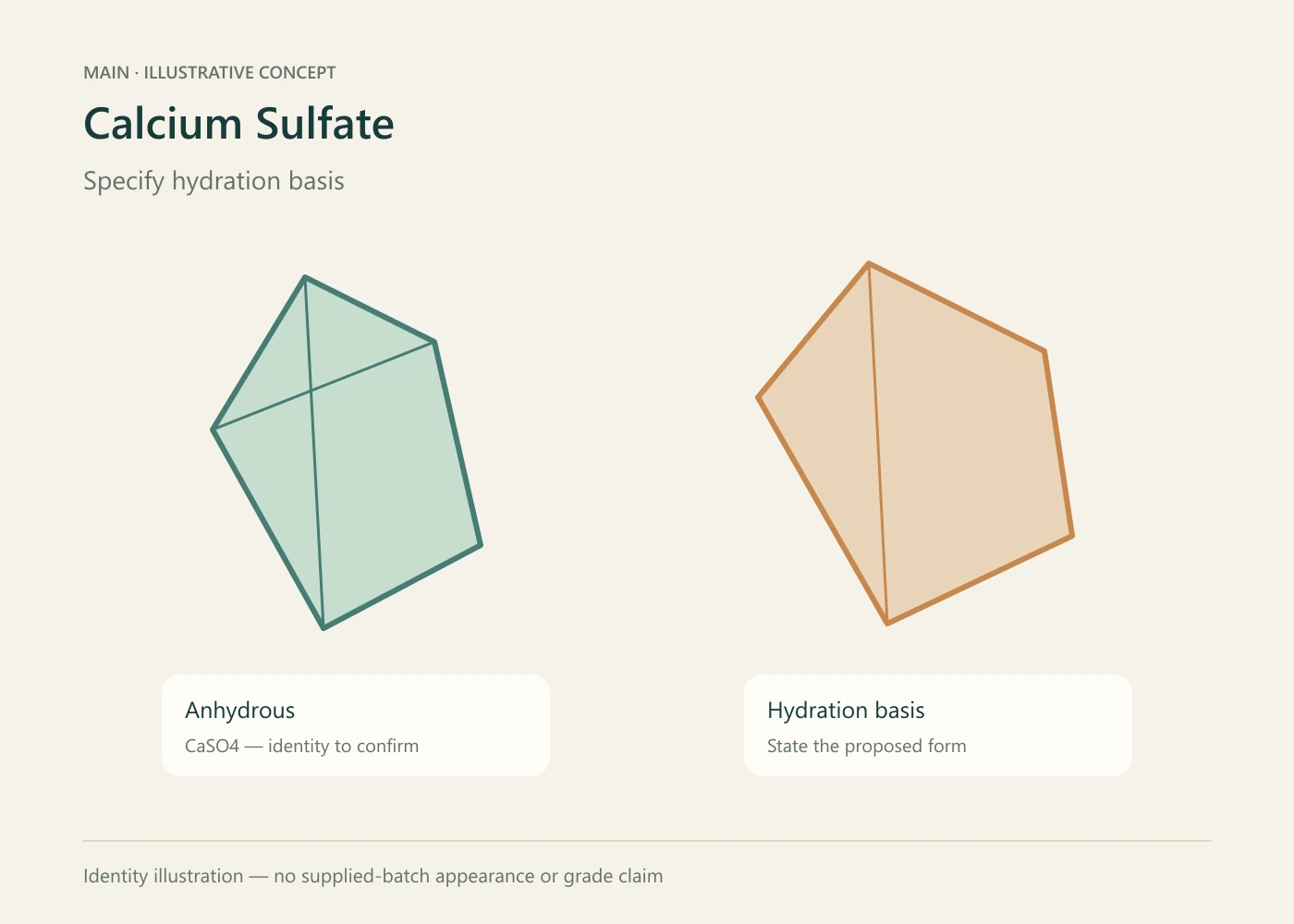
Define your ingredient input
Calcium sulfate is the named calcium–sulfate ingredient, with anhydrous and dihydrate presentations requiring their own identity and assay basis. Gypsum, anhydrite and the mineral-name use of selenite need context; sodium selenite is a different selenium compound. Specify the actual hydration state, particle characteristics and proposed material.
Discuss your procurement requirements
- Does the proposal identify calcium sulfate and state whether the material is anhydrous or hydrated?
- Which CAS identity and assay basis apply to the actual offered material?
- What intended food category, function and destination define the project?
- Which particle, hydration and analytical characteristics should a representative trial compare?
- What specification, analytical report and applicable intended-use documents can be reviewed?
- Can the supplier confirm sample quantity, purchasing quantity in kg, packaging, storage and quotation terms?
Other ingredient identity pages: Ammonium Phosphatides · Ethyl Cellulose · Hydroxypropyl Cellulose · Sodium Hydroxide · Calcium Hydroxide · Teff · Lucuma · Cupuacu · Breadfruit
Confirm the offered specification, analytical methods, sample arrangements and documentation with the proposed supplier for your intended project.
Bakery and grain-project evaluation
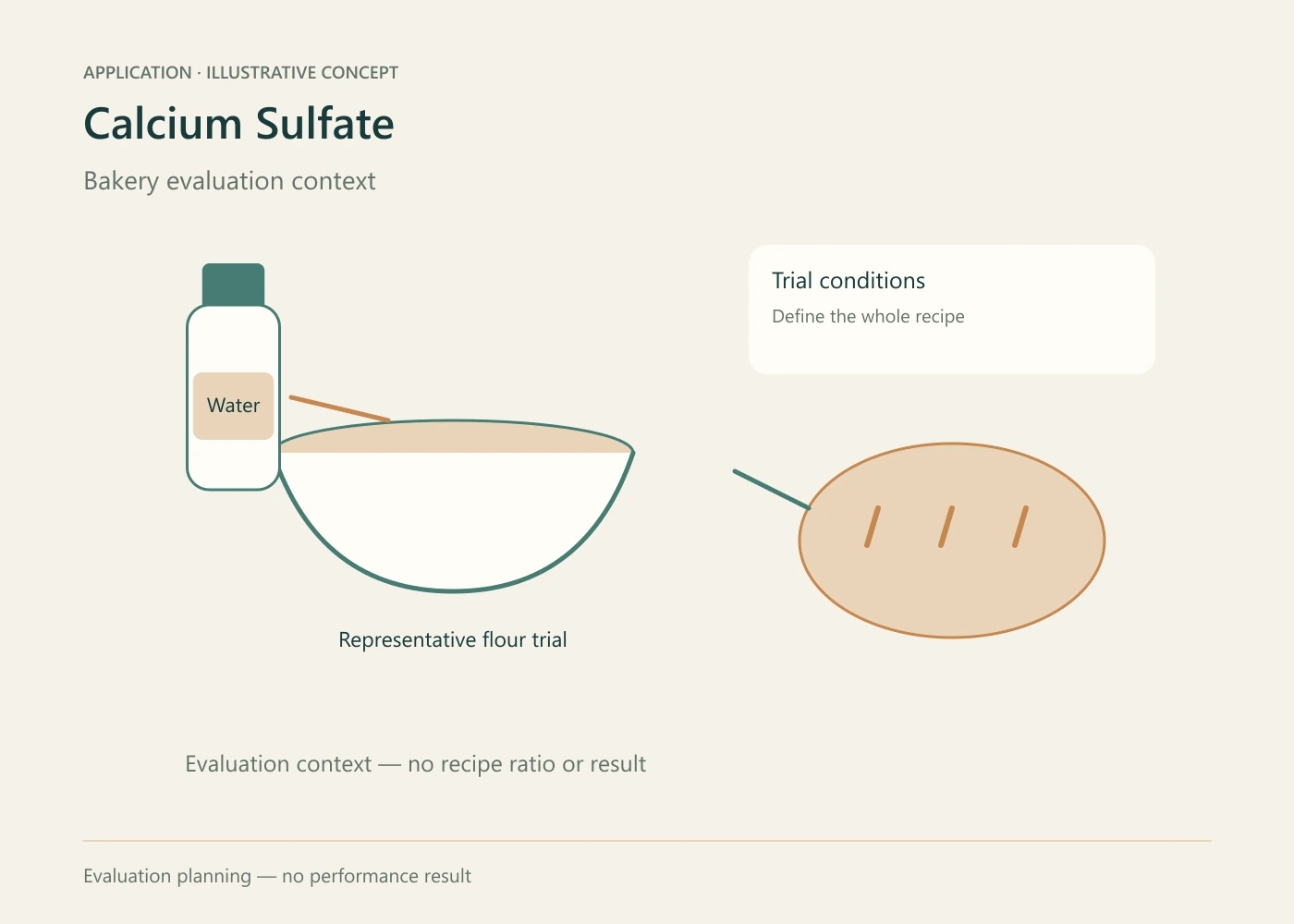
For a bakery or grain-processing brief, describe the intended ingredient role and the full formulation. Ask the supplier to identify the hydration state, analytical basis and physical characteristics of the material to be sampled. Review the applicable food-category conditions rather than copying a regulatory limit into a generic purchase specification.
Texture and firming-system comparison
Where a project concerns a firming or texture role, define the food matrix, processing conditions and comparison criteria. Record other mineral or hydrocolloid inputs separately. Evaluate the proposed calcium sulfate in a representative trial without inferring a texture result from the source’s list of possible functions.
Powder handling and specification alignment
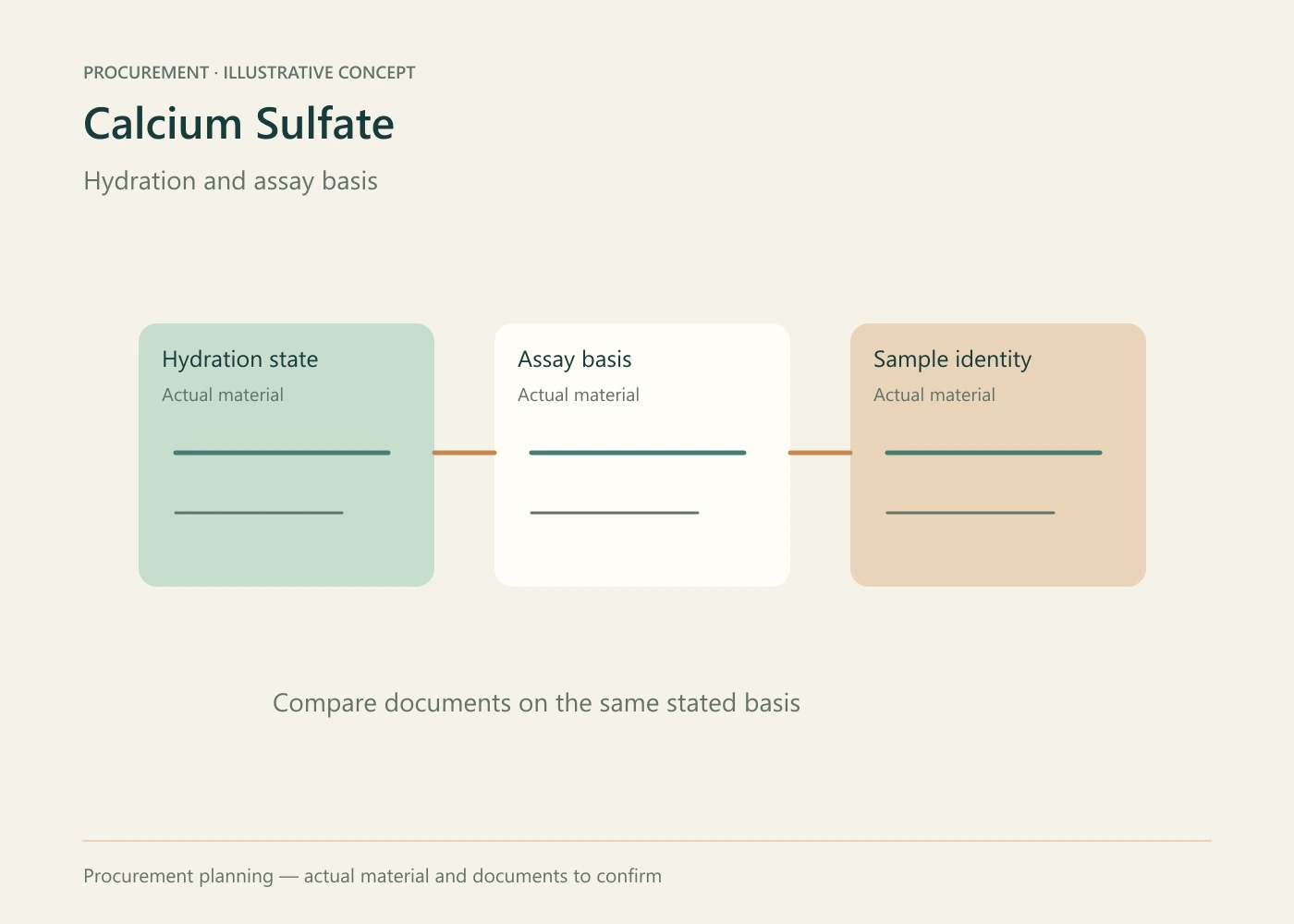
Compare assay reporting, moisture or hydration information and particle characteristics using stated methods. Clarify how samples will be stored and prepared for testing. The agreed specification should describe the actual proposed material; a mined origin, dehydration process or powder designation alone does not establish suitability.
Procurement questions and answers
Is mineral selenite the same as sodium selenite?
No. Mineral selenite can name a calcium-sulfate form, while sodium selenite is a different selenium compound. Use the complete chemical identity and documents to resolve the name.
How should anhydrous and dihydrate proposals be compared?
Specify the actual hydration state and the corresponding identity and assay basis. Compare the proposed calcium-sulfate materials on a clearly stated analytical and formulation basis.
Do the source specifications describe an offered batch?
No. The supplier must provide the specification and analytical results for the proposed material. Intended-use conditions also depend on the food category and destination.
Formulation and procurement gallery
Plan your purchase by kg
Share quantity in kg, intended formulation, destination and packaging requirements. Review the actual proposed material and purchase terms with the supplier.