Raw material sourcing by kg
Sodium Hydroxide
Define sodium hydroxide as the exact chemical input and specify the proposed form and analytical basis for the intended food process.
Explore Food Additives & Functional Food Ingredients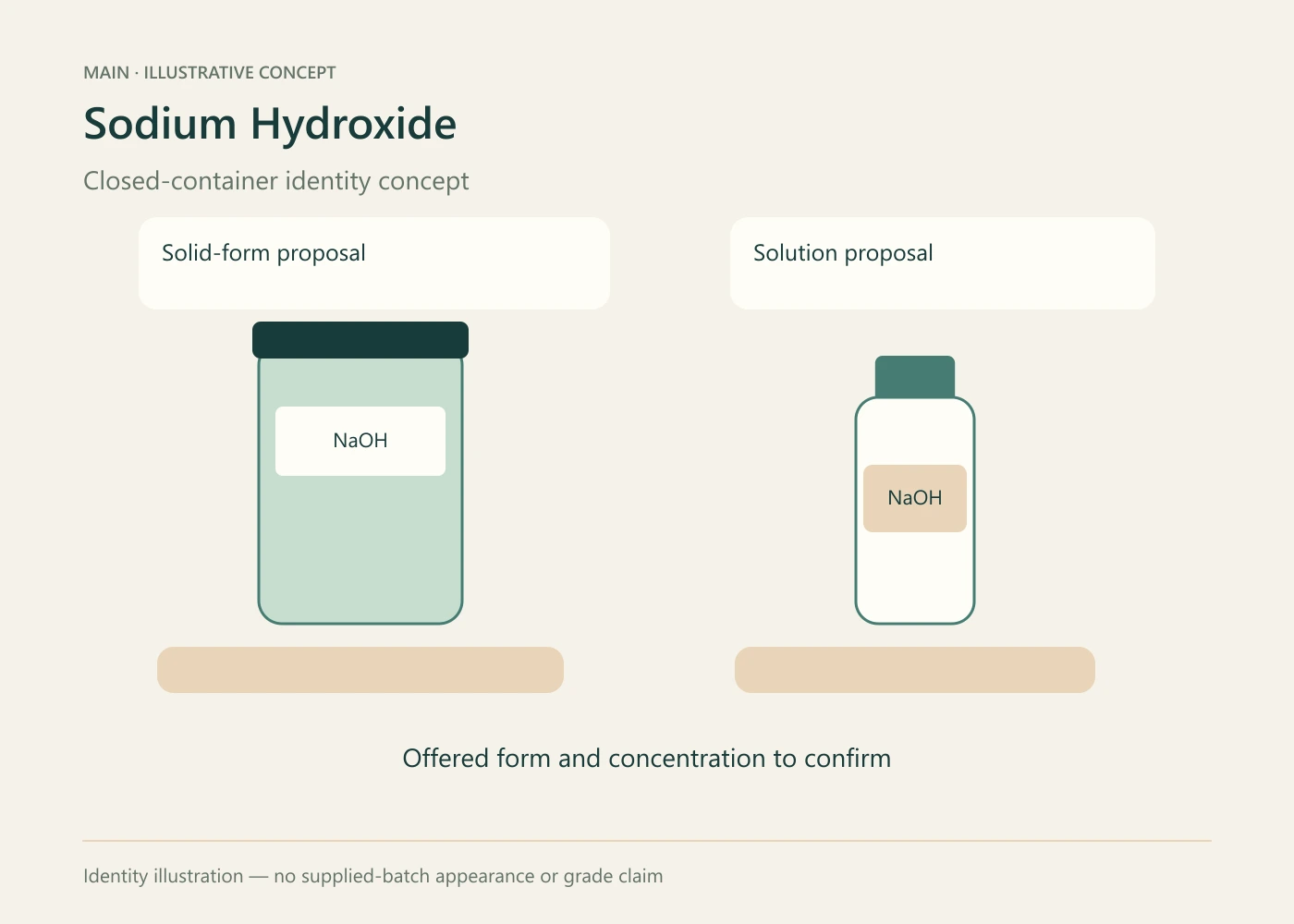
Define your ingredient input
Sodium hydroxide has the chemical identity NaOH. Solid forms and solutions describe how the same ingredient is offered, not additional ingredient families. Calcium hydroxide, potassium hydroxide, sodium carbonate and other alkaline materials have their own identities and are not interchangeable by name.
Discuss your procurement requirements
- Does the proposal explicitly identify sodium hydroxide, with CAS and specification documents?
- Is the material supplied as a solid or solution, and what concentration and assay basis are stated?
- Which intended food process and destination define the pH-control or processing-aid brief?
- Which identity, concentration and other analytical methods will be used to compare proposals?
- What intended-use, handling, storage and packaging documents apply to the proposed material?
- Can the supplier confirm sample arrangements, purchasing quantity in kg, lead time and quotation terms?
Other ingredient identity pages: Ammonium Phosphatides · Ethyl Cellulose · Hydroxypropyl Cellulose · Calcium Sulfate · Calcium Hydroxide · Teff · Lucuma · Cupuacu · Breadfruit
Confirm the offered specification, analytical methods, sample arrangements and documentation with the proposed supplier for your intended project.
pH-control project definition
Describe the intended food, process stage and pH-control purpose before comparing materials. Ask the supplier to confirm the proposed sodium hydroxide form, concentration and documentation. Agree the project’s evaluation criteria with the responsible formulation team; this brief does not provide an addition rate or a process instruction.
Processing-aid material comparison
For a processing-aid brief, identify the actual process and the material characteristics that matter to the comparison. Keep the proposed use and destination review specific. A reference to an ingredient provision does not establish that any technical-grade material or every application is appropriate.
Solid and solution purchasing basis
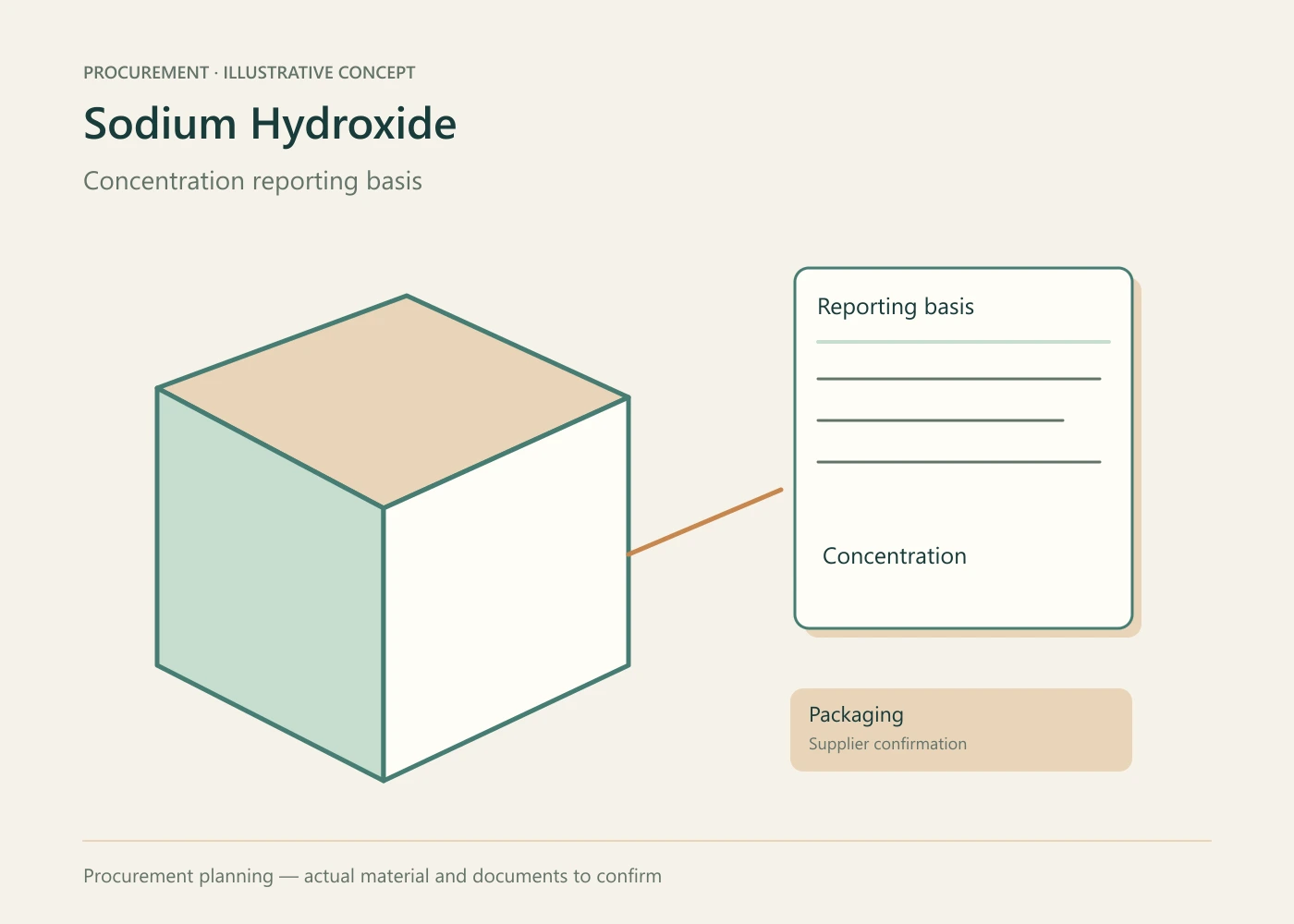
Where proposals differ in offered concentration or physical form, compare quantities and assay reporting on a stated basis. Request handling, storage and packaging information for the actual material. Keep these commercial and physical differences within the single sodium-hydroxide identity rather than presenting them as new ingredients.
Procurement questions and answers
How should different concentrations be compared?
State the concentration and analytical basis clearly when comparing sodium-hydroxide quantities and samples. Physical form alone does not describe the complete proposed specification.
Is sodium hydroxide equivalent to calcium hydroxide?
They are different named chemical inputs. Review the actual identity, specification and intended process instead of substituting on the basis of alkalinity alone.
Does the brief provide a use rate?
No use rate or processing instruction is supplied. The responsible team must review the actual food process, destination requirements and supplier documentation.
Formulation and procurement gallery
Plan your purchase by kg
Share quantity in kg, intended formulation, destination and packaging requirements. Review the actual proposed material and purchase terms with the supplier.