Raw material sourcing by kg
Ethyl Cellulose
Build an ethyl cellulose purchasing brief around its ethyl-ether identity and the intended formulation project.
Explore Food Additives & Functional Food Ingredients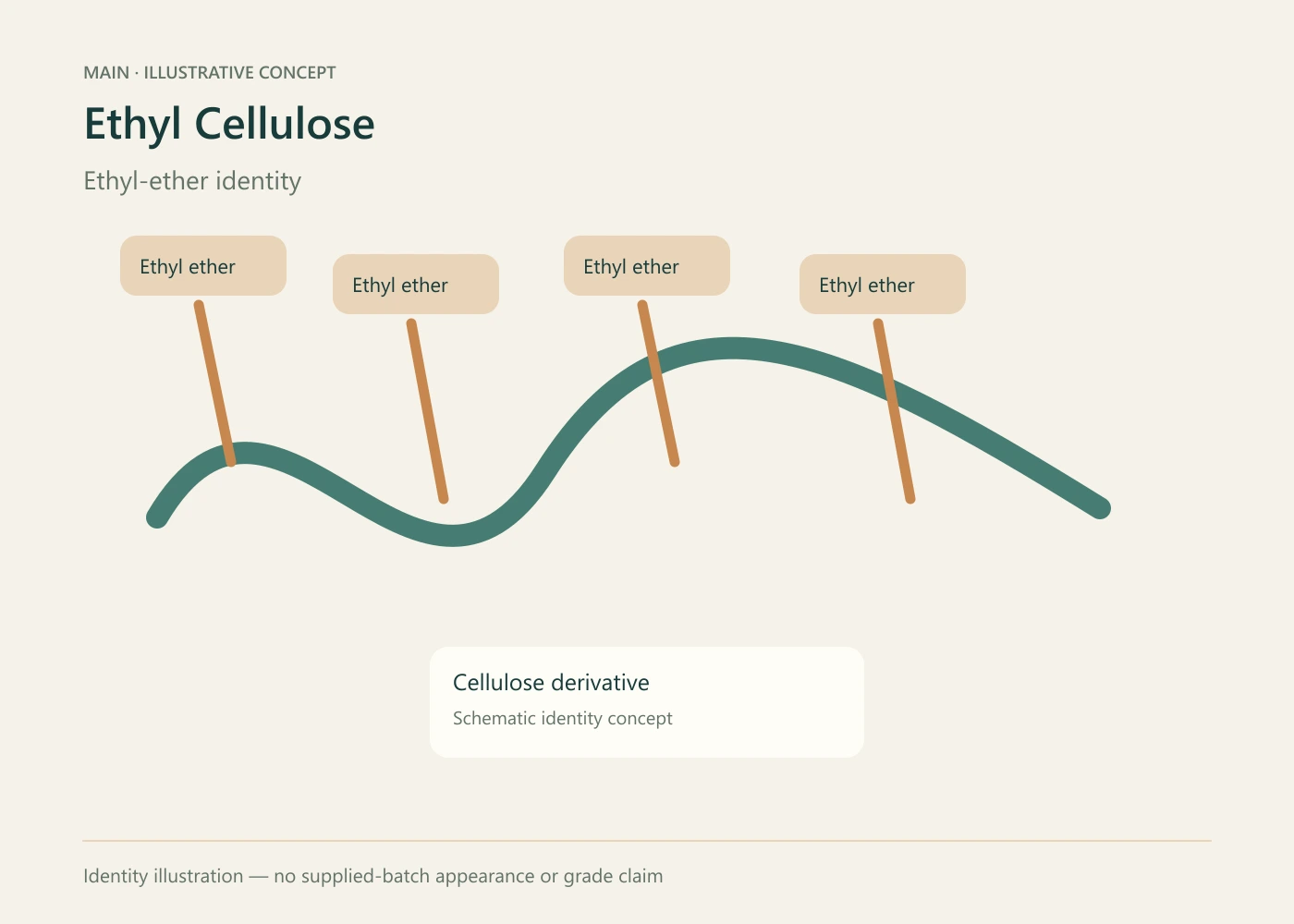
Define your ingredient input
Ethyl cellulose is cellulose partially etherified with ethyl groups. It is a different named cellulose derivative from hydroxypropyl cellulose, hypromellose, microcrystalline cellulose and sodium carboxymethyl cellulose. Ethoxyl content, viscosity and physical form describe a proposed grade within the ethyl-cellulose family; they are not separate new ingredient identities.
Discuss your procurement requirements
- Is the offered ingredient explicitly ethyl cellulose, with the ethyl-ether identity documented?
- Which ethoxyl-content, viscosity, moisture and particle characteristics define the selected grade?
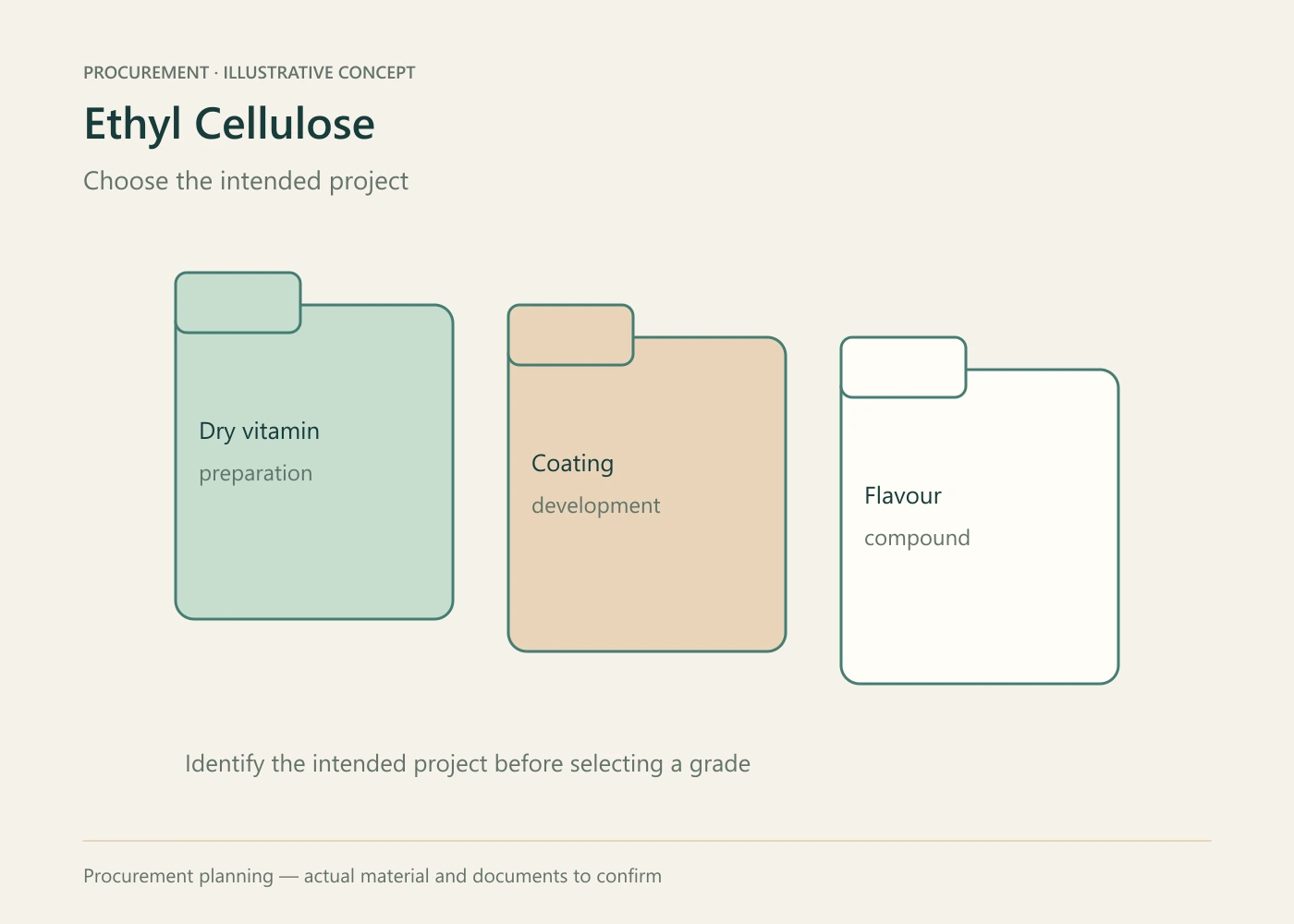
- Does the project concern a dry vitamin preparation, a vitamin/mineral tablet coating or a flavour compound?
- Which formulation medium, processing conditions and sample observations should be compared?
- Which identity methods, specification and intended-use documentation apply to the actual proposed material?
- What quantity in kg, sample size, packaging, storage and commercial terms can the supplier confirm?
Other ingredient identity pages: Ammonium Phosphatides · Hydroxypropyl Cellulose · Calcium Sulfate · Sodium Hydroxide · Calcium Hydroxide · Teff · Lucuma · Cupuacu · Breadfruit
Confirm the offered specification, analytical methods, sample arrangements and documentation with the proposed supplier for your intended project.
Dry vitamin preparation trials
For an intended binder or filler role in a dry vitamin preparation, identify the complete formulation and manufacturing conditions. Ask how the offered ethyl cellulose should be compared in a small trial. Record the selected grade and analytical basis rather than treating all cellulose materials as interchangeable.
Protective coating development
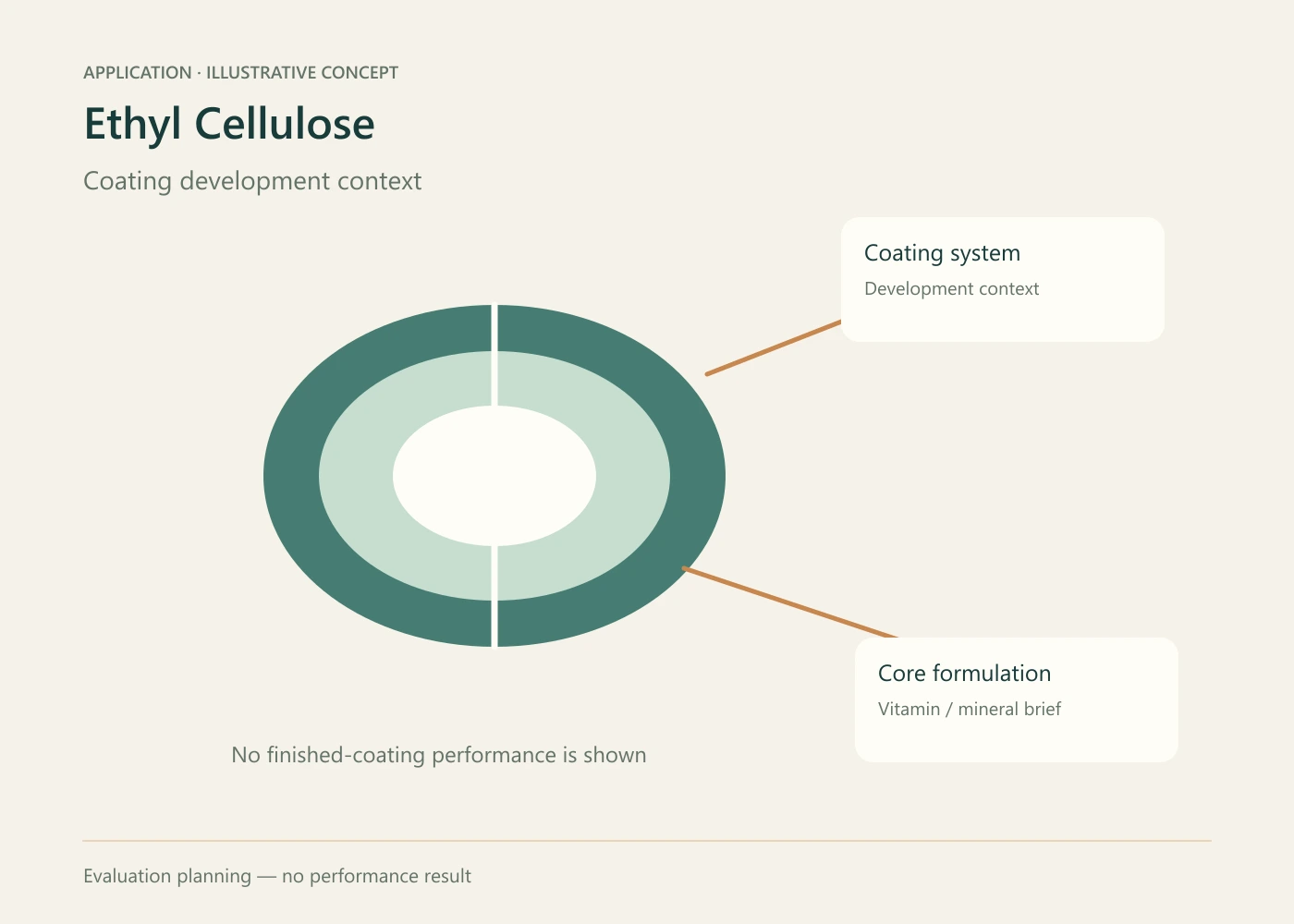
Where the project concerns a protective coating for vitamin or mineral tablets, describe the coating system and the observations to be assessed. Confirm the material identity, formulation components and process compatibility with the supplier. The named regulatory use context does not establish a finished coating performance or the suitability of an unspecified grade.
Flavour-compound project review
For a flavour-compound development brief, clarify the intended fixative role, composition and processing medium. Ask for suitable identity and grade documents and define the sample comparison. Keep the application within the actual intended-use review; this brief does not extend a specific provision to every food or destination.
Procurement questions and answers
Is ethyl cellulose the same as hydroxypropyl cellulose?
They are differently substituted cellulose ethers. Identify the required derivative and evaluate the actual grade in the proposed formulation.
What does a viscosity designation establish?
It is a grade characteristic that needs a stated test method and conditions. Confirm the ethyl-cellulose identity and the actual formulation response separately.
Are broad food-use permissions claimed here?
The read US provision names particular use contexts, and the original 2012 EU text supplies historical identity specifications. Current destination and intended-use review remains necessary.
Formulation and procurement gallery
Plan your purchase by kg
Share quantity in kg, intended formulation, destination and packaging requirements. Review the actual proposed material and purchase terms with the supplier.