Raw material sourcing by kg
Potassium Propionate
Prepare a potassium propionate purchasing brief around the potassium-salt identity, the proposed material specification and the formulation questions to evaluate.
Explore Food Additives & Functional Food Ingredients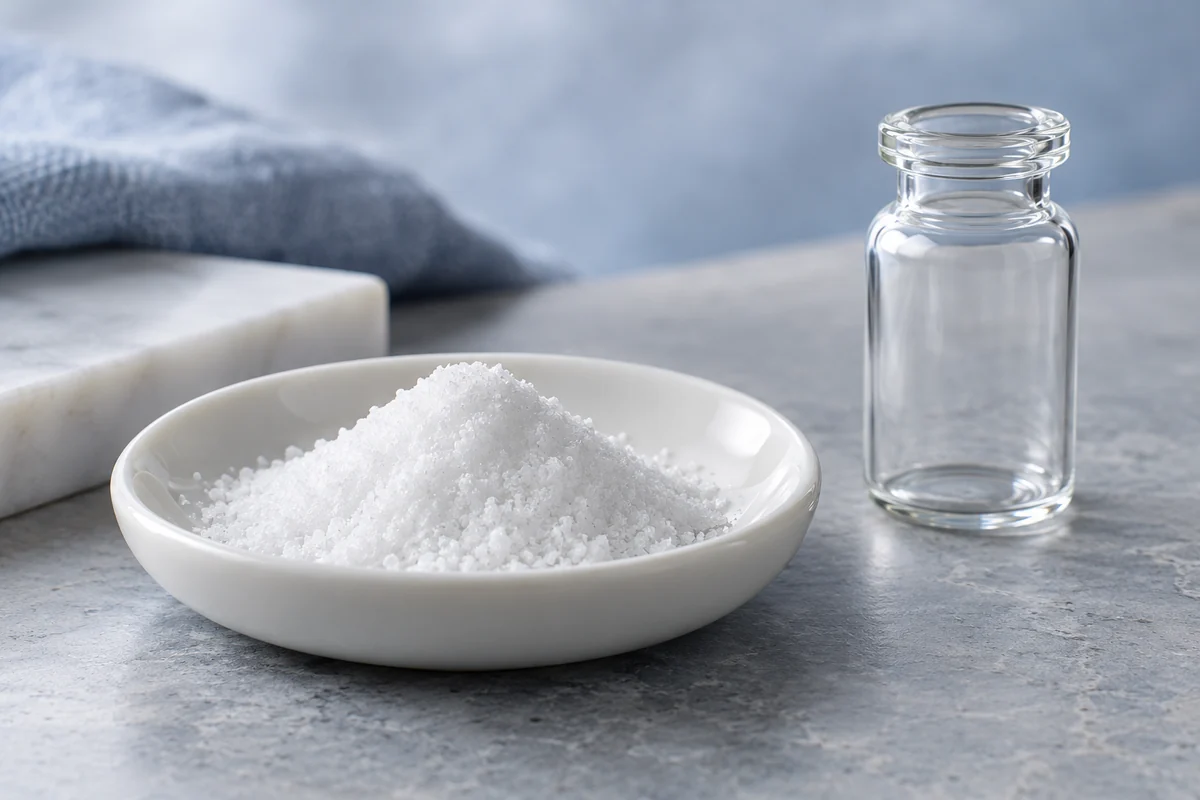
Define your ingredient input
Potassium propionate is the potassium salt of propionic acid and is also named potassium propanoate. It is distinct from the sodium and calcium salts. The available manufacturer information and historical food-additive specification support this chemical identity; they do not establish unrestricted use in every current food category or destination.
Discuss your procurement requirements
- Does the proposal confirm potassium propionate or potassium propanoate and its complete composition?
- Which identity, assay, moisture and impurity methods describe the actual proposed material?
- What intended food, technical purpose and destination-use documentation should be reviewed before a trial?
- Which dissolution, mixing and moisture-handling conditions should the representative sample evaluation reproduce?
- If another propionate is being compared, what common formulation and analytical basis will be used?
- What sample arrangements, quantity in kg, packaging, storage guidance and commercial terms should the supplier quote?
Other ingredient identity pages: Calcium Alginate · Ammonium Alginate · Potassium Alginate · Sodium Propionate · Calcium Benzoate · Stearyl Citrate · Sodium Stearyl Fumarate · ACETEM · LACTEM
Confirm the offered specification, analytical methods, sample arrangements and documentation with the proposed supplier for your intended project.
Document-led formulation development
If a formulation brief specifies potassium propionate, identify the intended food, technical purpose and destination first. Review the relevant use conditions and the actual offered specification before choosing a sample trial. Keep the ingredient identity separate from a claim that a particular market or food category permits the proposed use.
Premix and dissolution evaluation
Describe the water phase, mixing sequence and concentration range to be examined in a permitted project. Ask for a representative sample and compare dissolution, moisture handling and compatibility under documented conditions. The physical appearance of a powder does not identify its composition or grade.
Propionate-salt comparison studies
Where the project is considering different propionate inputs, compare the complete potassium, sodium or calcium salt specifications and their role in the recipe. Set the comparison basis before interpreting results. A different counter-ion is an identity distinction, while particle form or supplier grade alone does not create another ingredient.
Procurement questions and answers
How should potassium propionate be compared with sodium or calcium propionate?
Confirm each material’s full chemical identity and specification, then compare it on the same formulation and analytical basis. Evaluate the different salts for the intended food process.
Does a historical E283 specification prove current permission for every food?
No. It is an identity and specification reference. Review the intended use against the requirements applicable to the actual destination and food category.
What use documentation should be reviewed for the intended food?
Review the intended food category, destination requirements and the supplier’s use documentation. A food-contact provision does not establish direct-food permission.
Formulation and procurement gallery


Plan your purchase by kg
Share quantity in kg, intended formulation, destination and packaging requirements. Review the actual proposed material and purchase terms with the supplier.