Raw material sourcing by kg
Succinic Acid
Succinic acid, also called butanedioic acid, appears in food flavour ingredient supply as well as reagent and industrial contexts. The offered material and its intended specification should be identified before sample evaluation.
Explore Food Additives & Functional Food Ingredients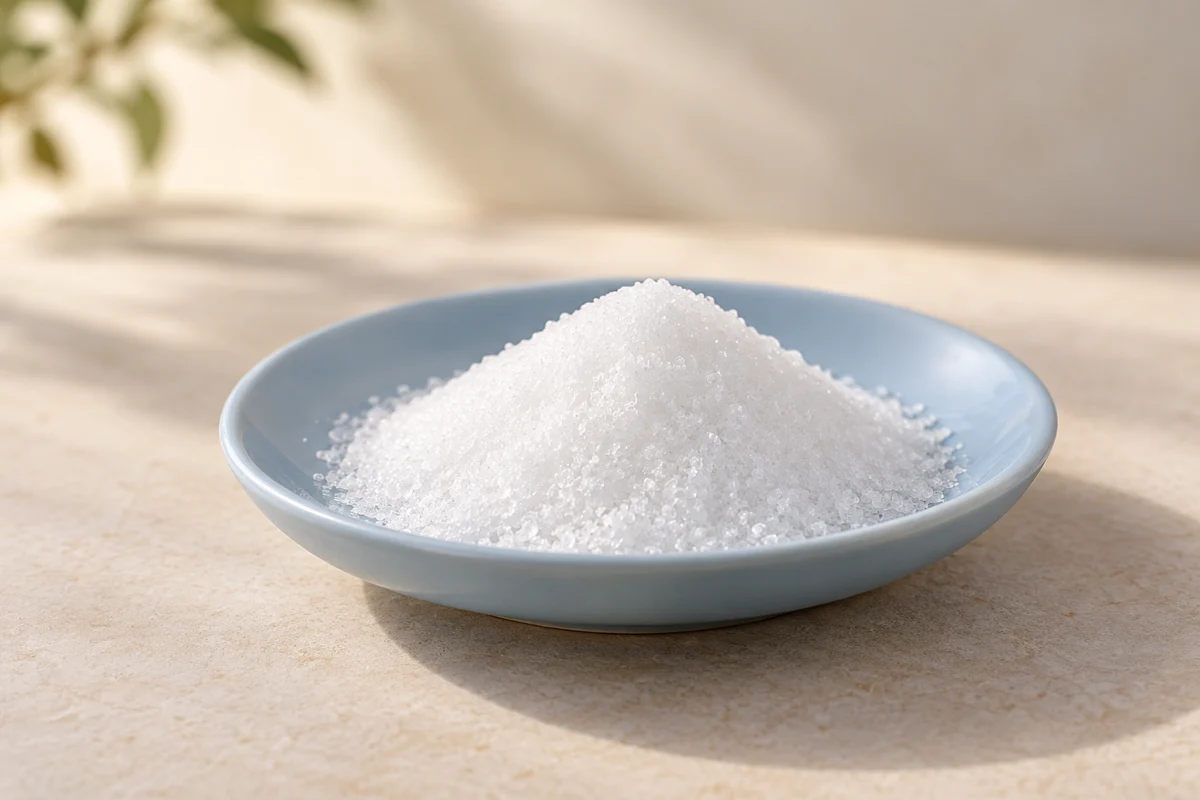
Define your ingredient input
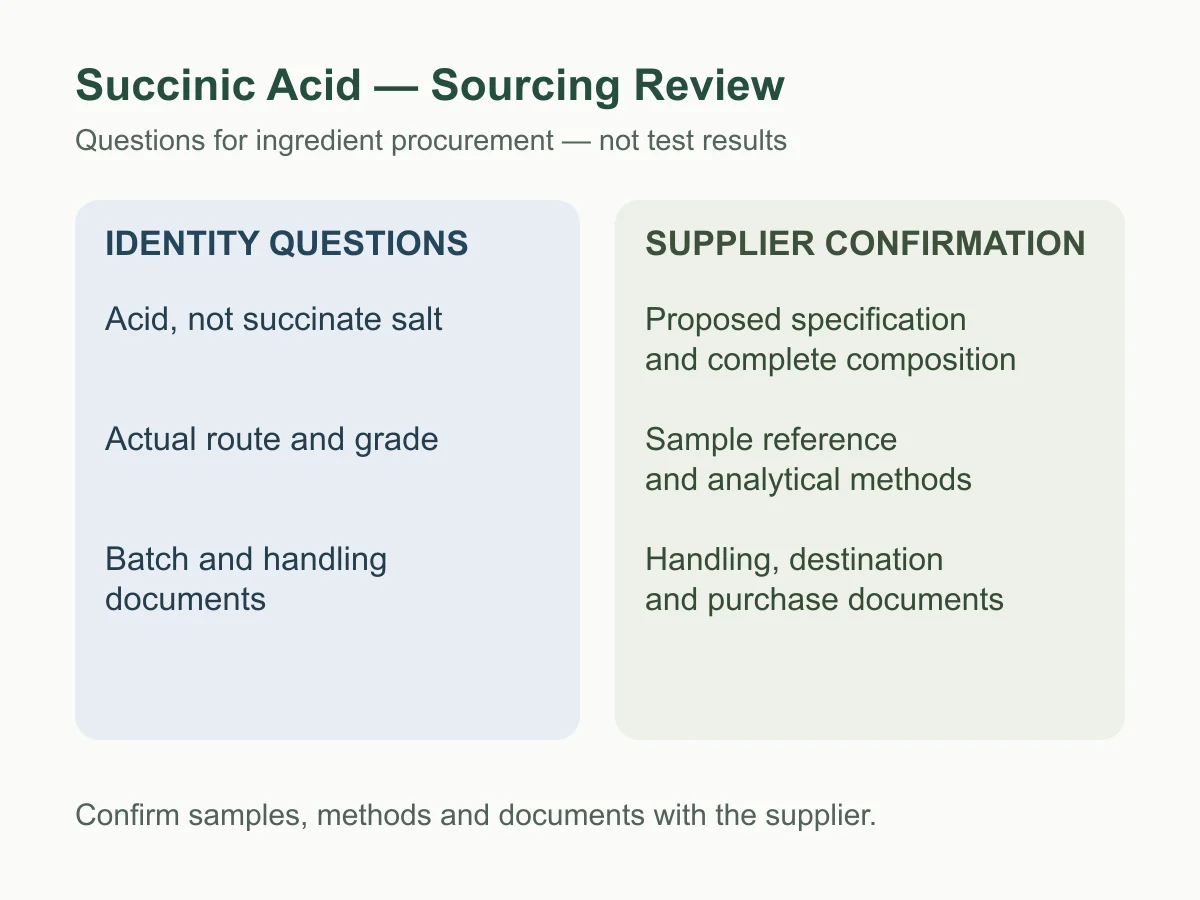
A common chemical identity does not make a reagent, a food flavour ingredient and an industrial feedstock interchangeable offers. Keep succinic acid separate from succinate salts and from other organic acids. The actual production route, impurity profile and documentation need to be confirmed for the supplier's proposed material; a published catalogue entry is not our batch specification.
Discuss your procurement requirements
- Is the proposal succinic acid rather than a succinate salt, ester or mixed acid system, and what identity evidence is supplied?
- Which food-use specification describes the proposed material, and how does the supplier distinguish it from reagent or industrial offers?
- Can the actual production route, raw-material basis and relevant process-residual documents be confirmed?
- How are assay, acidity, water and relevant impurity results measured and expressed for each batch?
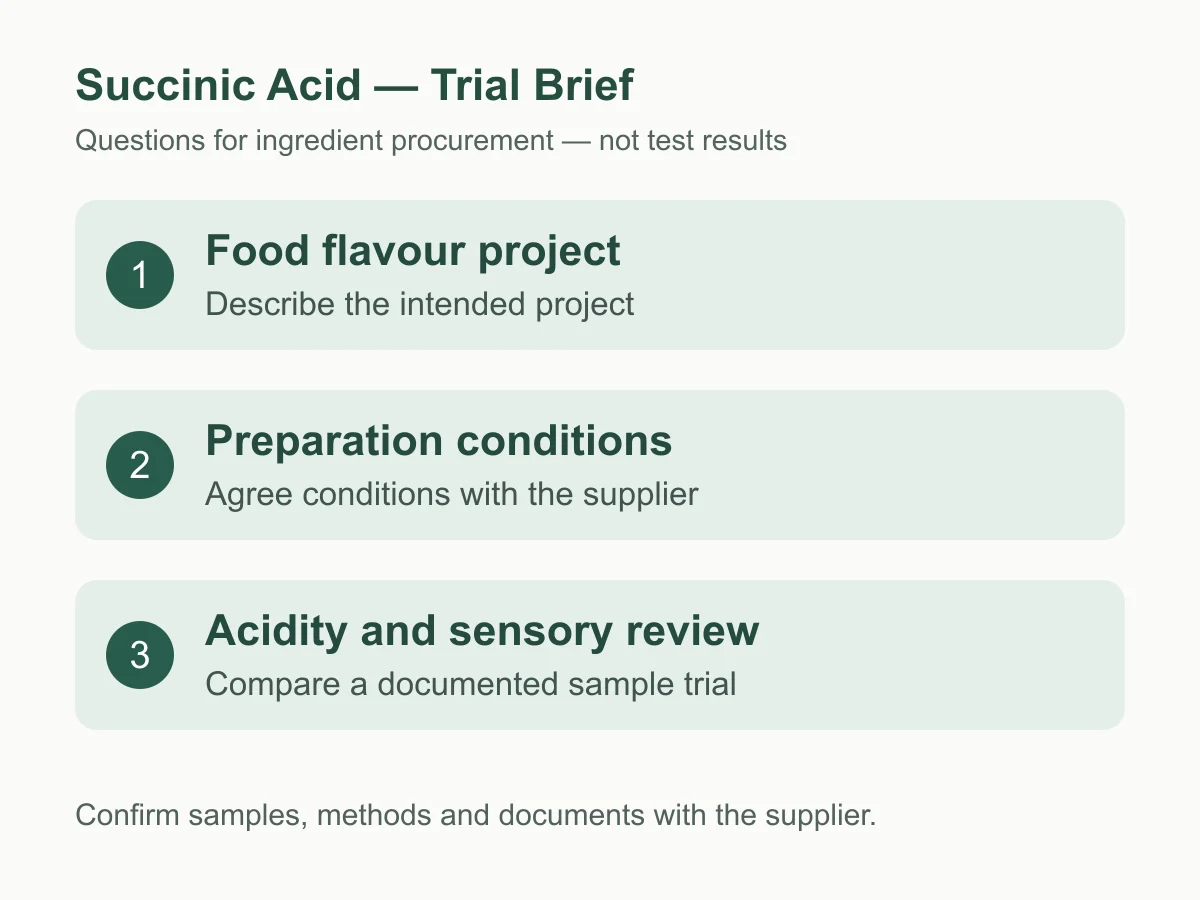
- What particle and dissolution conditions, food matrix and flavour evaluation protocol should be agreed for a sample trial?
- Can the supplier confirm the sample, handling and storage guidance, packaging, required kg quantity, destination documents and commercial terms?
Other ingredient identity pages: Disodium 5'-Inosinate · Adipic Acid · DATEM · Beta-Cyclodextrin · Gum Ghatti · Karaya Gum · Tragacanth Gum · Curdlan · Gamma-Cyclodextrin
Confirm the offered specification, analytical methods, sample arrangements and documentation with the proposed supplier for your intended project.
Use a precise acid-versus-salt identity
Write succinic acid and the synonym butanedioic acid together in the brief when useful for matching documents. A succinate salt or ester is a different procurement input and should not be accepted as an equivalent based on a related name. Ask for the identification method and the complete composition of the offered material, including any carrier or other acid if the proposal is a formulated blend.
Do not transfer a catalogue specification
Public catalogues can establish the named chemical and show that food flavour ingredient and reagent supply contexts exist. They do not establish the route, grade, assay, certification or availability of a separate supplier offer. Ask for a project-specific specification, the analytical basis for reported results and a batch report. Numerical catalogue properties are not adopted as the specification of an unverified material here.
Plan a documented food-formulation comparison
Describe the target food matrix, preparation conditions and evaluation criteria before requesting a sample. Align dissolution, acidity and sensory comparison conditions with the supplier. Obtain appropriate handling, storage and destination information for the actual proposed form. No health effect, application limit, market suitability or formulation outcome is promised by this sourcing page.
Procurement questions and answers
Is butanedioic acid another name for succinic acid?
Yes. Use the synonym to match identity documents, while checking that the proposal is the acid rather than a salt or ester.
Can reagent material be assumed suitable for food use?
No. Confirm the proposed food-use specification and documentation separately.
Is the production route fixed here?
No. Obtain the actual supplier's route and relevant input or residual-process documents.
Formulation and procurement gallery
Plan your purchase by kg
Share quantity in kg, intended formulation, destination and packaging requirements. Review the actual proposed material and purchase terms with the supplier.