Raw material sourcing by kg
Tragacanth Gum
Develop a tragacanth gum sourcing enquiry by kg around the botanical exudate rather than an Astragalus root ingredient. Agree the preparation description and evaluation methods relevant to the project before comparing samples.
Explore Food Additives & Functional Food Ingredients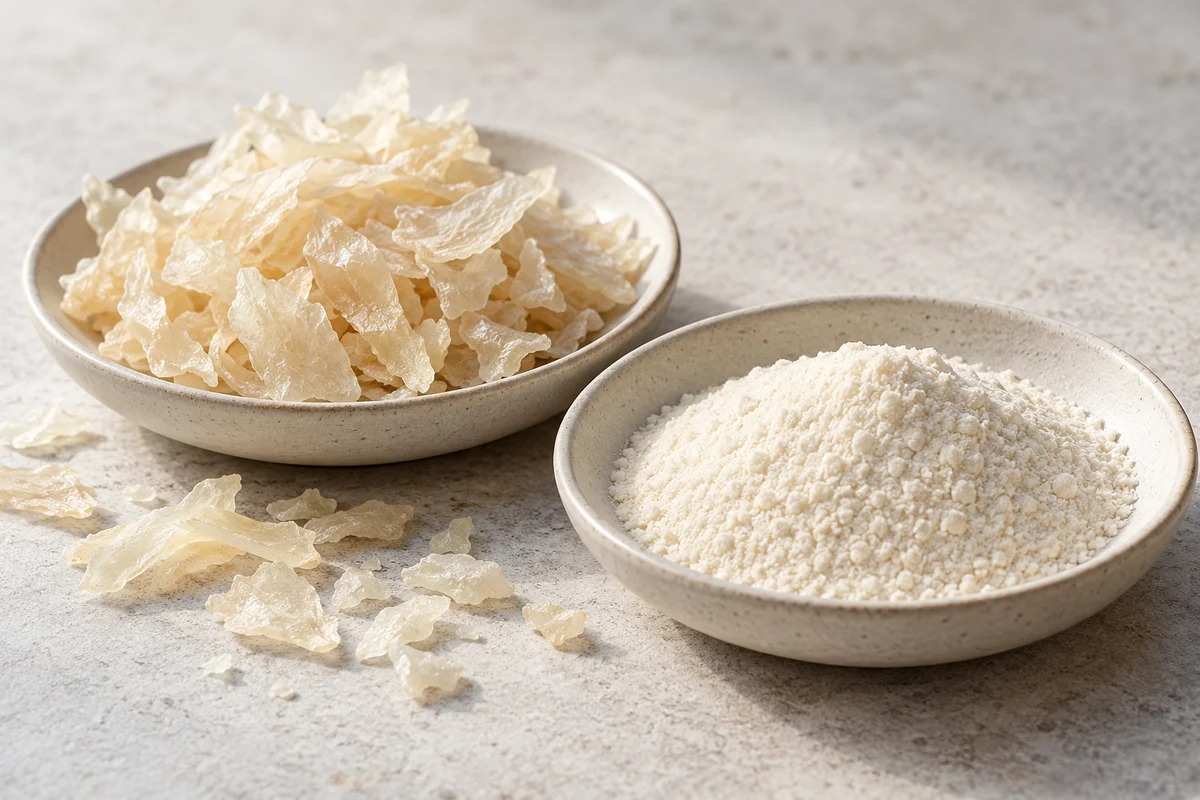
Define your ingredient input
The producer page describes Astragalus-derived exudate, drying and grinding, and lists food applications. The FAO JECFA HTML records the additive identity Tragacanth Gum. Neither source establishes the exact supplied species, batch, specification or legal applicability for a destination.
Discuss your procurement requirements
- Is the intended input tragacanth gum exudate rather than Astragalus root powder or extract?
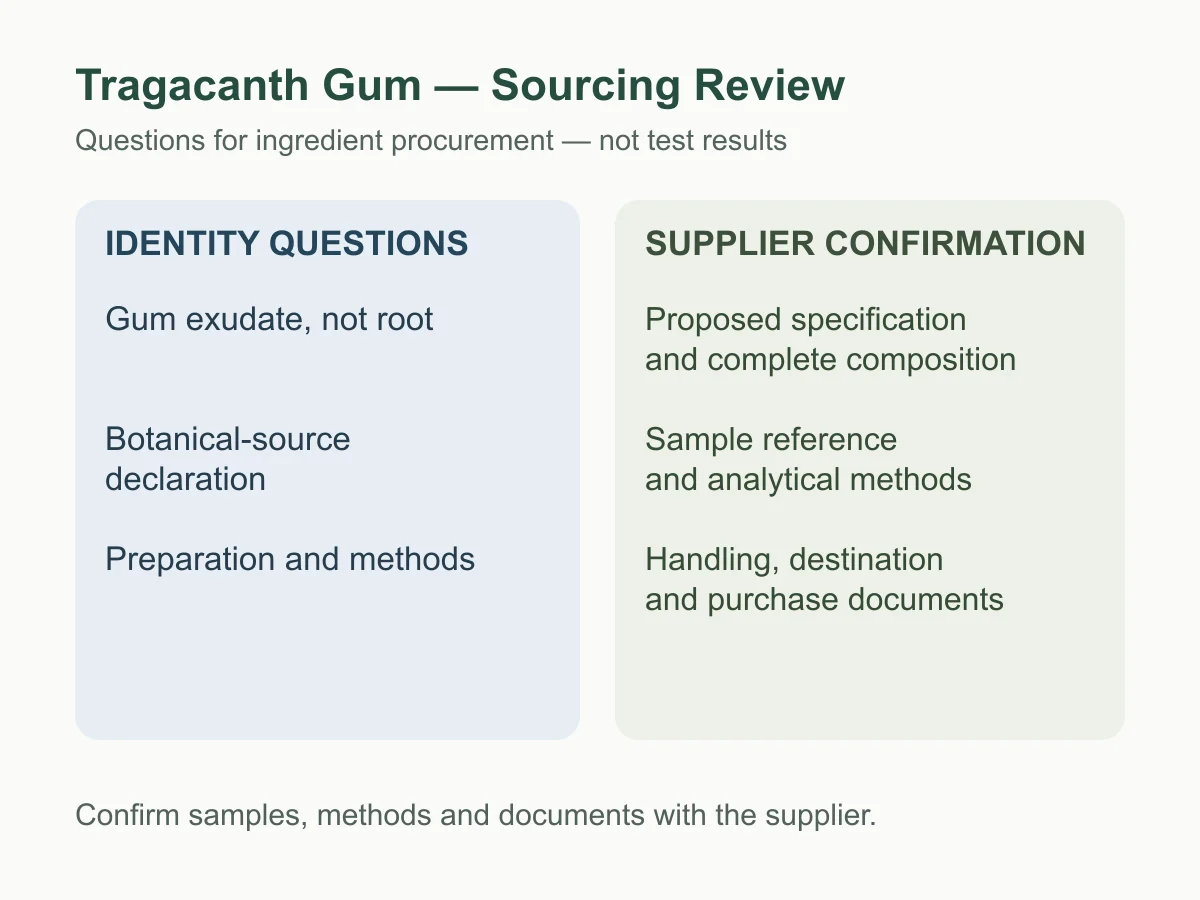
- Which botanical source and complete preparation does the supplier propose?
- Which powder, ribbon or flake handling form fits the process without creating grade-based duplicate products?
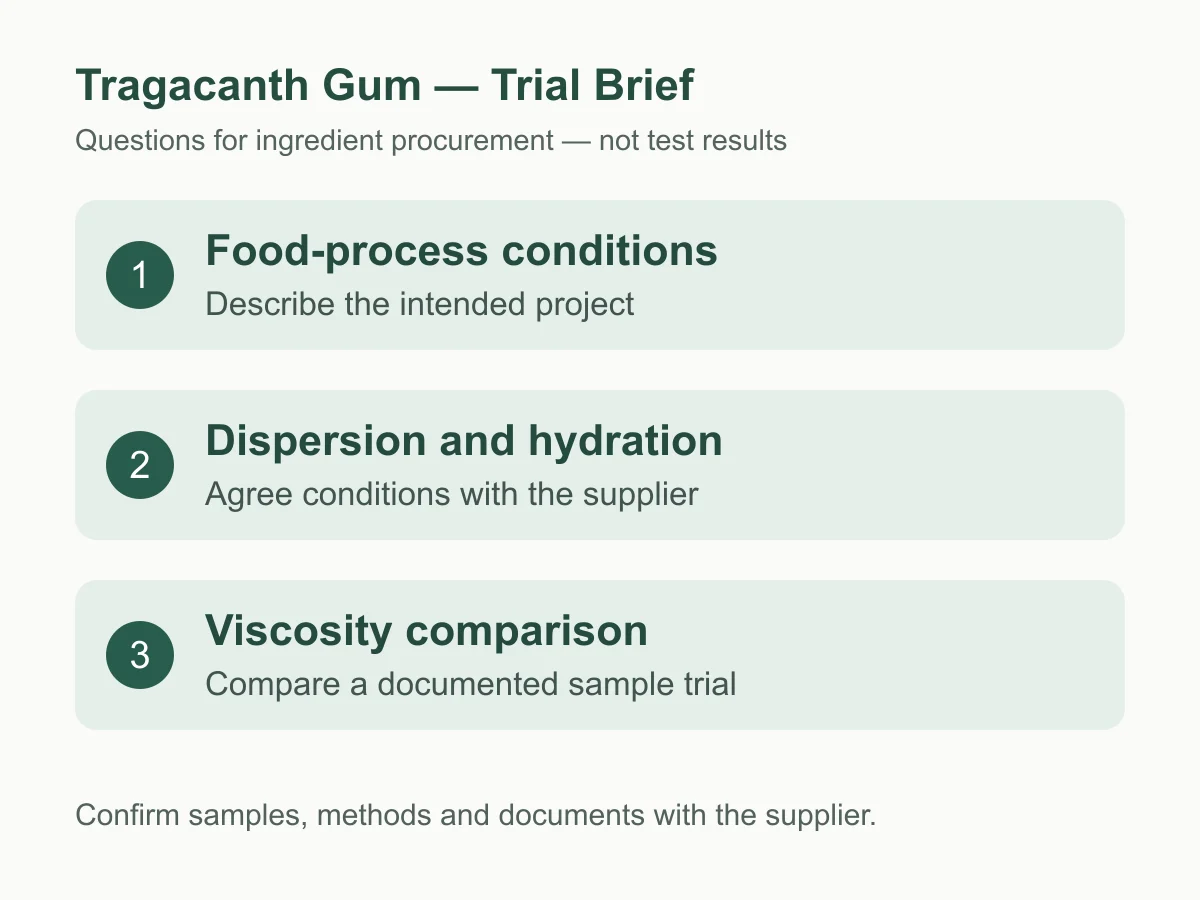
- Which dispersion and hydration procedure should be evaluated in the intended formulation?
- Which viscosity or texture method, sample conditions and reporting units will be used?
- Which sample reference, preparation and handling documents, quantity, packaging and timing should be discussed?
Other ingredient identity pages: Disodium 5'-Inosinate · Adipic Acid · Succinic Acid · DATEM · Beta-Cyclodextrin · Gum Ghatti · Karaya Gum · Curdlan · Gamma-Cyclodextrin
Confirm the offered specification, analytical methods, sample arrangements and documentation with the proposed supplier for your intended project.
Separate gum exudate from root ingredients
Specify tragacanth gum as the exudate hydrocolloid. Astragalus root powder and root extracts have different procurement identities, even where their plant genus overlaps. Ask which botanical source and complete preparation the supplier proposes, including additional gums or carriers where present. A generic enquiry need not invent a single species from a public spelling or imply that the photographed raw gum is the material being offered.
Discuss dispersion and viscosity methods
Describe the intended sauce, dressing, dairy, bakery or other formulation context and the processing conditions to be assessed. Ask how the proposed gum should be dispersed, hydrated and measured. Use defined sample preparation, temperature and reporting units when comparing viscosity or texture observations. Powder, ribbon and flake presentations may have different handling needs, but they do not automatically create separate ingredient products or guarantee a formulation result.
Keep source context separate from a supplier offer
Request a preparation declaration, sample reference and the specification and analytical-method information appropriate to the project. Discuss handling, packaging preference, quantity and timing with the supplier. Public additive listings provide identity context rather than a statement that any proposed lot meets a particular legal requirement. Certification, origin, shelf life and application suitability should not be inferred from another producer's public product range.
Procurement questions and answers
Is tragacanth gum the same as Astragalus root extract?
No. A botanical gum exudate and a root-derived powder or extract are different procurement inputs. The proposed preparation should be identified clearly.
Must a generic enquiry name one exact Astragalus species?
Do not invent one. Describe the gum family truthfully and ask the supplier to declare the botanical source of the material proposed.
Does a public additive listing prove compliance for a supplied lot?
No. Confirm the actual proposed material, supporting documents and destination requirements. This page makes no approval or certification claim.
Formulation and procurement gallery
Plan your purchase by kg
Share quantity in kg, intended formulation, destination and packaging requirements. Review the actual proposed material and purchase terms with the supplier.